
















































How Would Gov. Xavier Becerra’s ‘Power Hour’ Work?
The incoming governor will have to confront rising energy costs. As a candidate he proposed a program for free midday electricity.
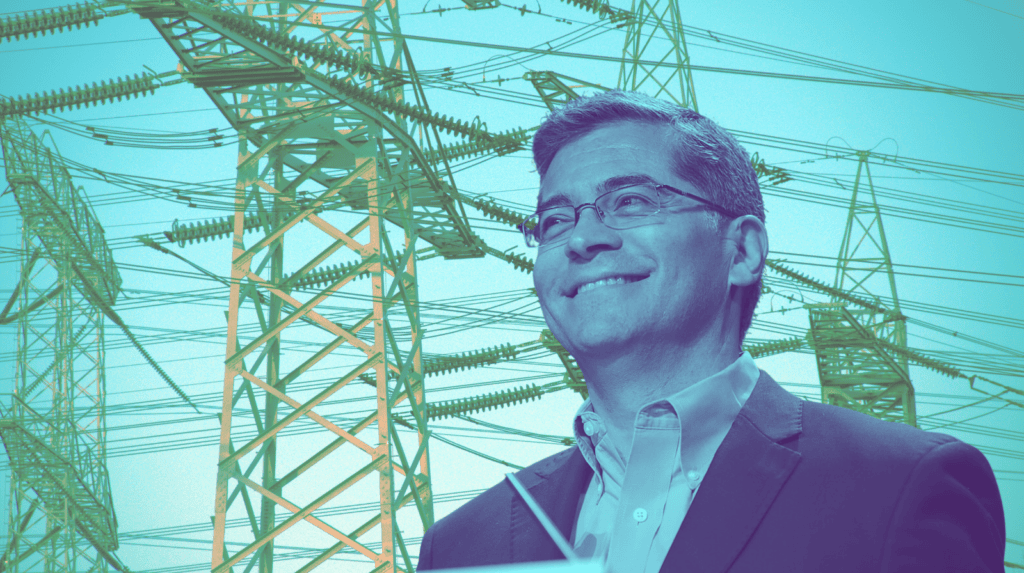
Welcome to the “Becerra Era.” Surprising no one, Xavier Becerra was overwhelmingly elected to be California’s next governor. Now, he will be thrust immediately into the fray on some of the most challenging environmental and energy issues facing the state — including rising energy costs. (Some advice for the next governor here.) The energy component of this Becerra Era could first be defined by a “power hour.”
As a candidate, Becerra focused on lowering power bills and then proposed a Power Hour. It’s a simple idea: Basically, it would provide up to two hours of free electricity every afternoon when power is the cheapest (and cleanest) thanks to solar energy. But nothing about the power sector is simple. I asked my UCLA Emmett Institute colleague Denise Grab to explain in a little more detail how the proposal might work. Grab directs the Emmett Clean Energy Law & Leadership Project. She told me it’s a good first step.
What is encouraging about this Power Hour proposal?
This is a promising first step into thoughtful energy policy for the new Becerra administration. As described on the campaign website, Power Hour is a win-win-win policy, saving lower-income families money on their electricity bills, helping to increase grid reliability by shifting power use to times when electricity is more plentiful, and encouraging the use of cleaner solar power mid-day.
How might it work?
Judging from the campaign website, the Power Hour free energy would automatically apply to qualifying families’ bills, specifically households that are already enrolled in the CARE and FERA low-income discount programs. These households would simply not be charged for any electricity used during the daily two-hour Power Hour window. They would still be charged for electricity used outside this window, as well as applicable fixed charges for grid access. The campaign website contemplates the possibility of expanding eligibility to more households in the future.
Could it provide relief to some of the high electrical bills that have been in the news lately or do you see some challenges?
There are two things that may limit the program’s effectiveness, at least as currently described.
Qualifying families may need additional support in order to take advantage of Power Hour. Lower-income families and renters may be less likely to have pricier “smart” appliances, panels, or thermostats that would enable them to automatically shift power use to midday. In order to take full advantage of Power Hour, families will either need to be home midday to turn on the relevant devices, or have the ability to set devices to run at the applicable times.
The program applies only to investor-owned utilities that are regulated by the California Public Utilities Commission. So, Power Hour would not be available to the 2.4 million Californian households who receive their electricity from a municipal utility. It’s also unclear how exactly the program would apply to the 6.5 million Californian households who are investor-owned utility customers but buy their power from a community choice aggregator (CCA).
Related to that, some municipal utilities (notably LADWP) don’t even have smart meters for most households, so it would be literally impossible for them to offer a program like Power Hour, since the utility cannot tell when in the day the power is being used. LADWP is working to roll out universal smart meters over the next couple of years.
Is this ambitious or piecemeal: how would you situate it or compare it to other energy, utility reform and electric grid policies?
Power Hour as currently proposed may not be thinking big enough. While prioritizing lower-income families is certainly worthy, it might make sense to expand the program beyond just lower-income households. If the program applies during hours when there is a glut of solar energy, it makes sense to shift usage in as many homes as possible to use up that extra energy when it’s plentiful, and reduce usage when electricity is scarcer. The main IOUs all have time-of-use rates that at least generally disincentivize power use when it is scarcer, but a broader Power Hour would likely be a stronger incentive. It’s worth noting that the Los Angeles-area CCA Clean Power Alliance is currently piloting a free-electricity-during midday program, which could help show the promise of a broader approach. Of course, lower-income households should still receive extra bill support, as well as assistance to install technology that can help take advantage of cheaper midday power.
Power Hour is a sensible step for the incoming administration that will help support working families and a clean and reliable electrical grid. There’s much more that the new governor will have to do to ensure affordable, reliable, and clean energy for all, but this is a good first step.


About Evan

Evan George is Director of Communications for the UCLA Emmett Institute, a leading environmental law center. He also writes The Drain, a weekly roundup of environmental a…
READ moreAbout Denise

Denise Grab is the Energy Law and Policy Project Director for the Emmett Institute on Climate Change and the Environment at UCLA School of Law. Before joining the Emmett …
READ more
Reader Comments