



















































Dear 2026 1L
Today’s entering law students are preparing to start careers at a critical time for the environment.
Summary
Students entering law school today are coming at a critical time. With environmental protection under constant attack from the Trump Administration and carbon emissions mounting, the need for action is urgent. Today's law students will serve vital roles in efforts to protect the world from climate change, save biodiversity, and protect human health.
Dear Entering 1L:
Welcome to law school. You’re beginning your life in the law at a critical time. What we do together between now and 2035 will determine what your lives look like in 2050 and 2080, and what your children and grandchildren will see in the next century. So, grab your books, get yourselves ready, and be prepared to head for the legal trenches when you graduate. No time to waste!
The Current Situation
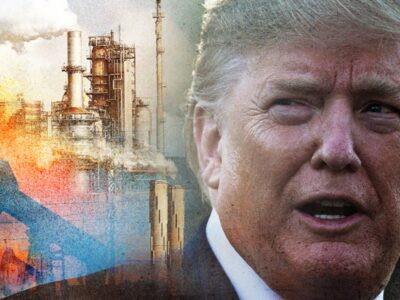
It’s no secret that this is a dark time for people who care about the environment. The Trump Administration, with substantial support from the Republican Congress, has embraced the goal of boosting fossil fuels. Their solution to the environmental harms caused by these fuels is denial — denial of the seriousness of climate change, denial of the harmfulness of air pollution, and denial of the value of ecosystems. In short, we are digging ourselves deeper into a hole.
Another challenge is concern about affordability, which is taking the edge off of some of the most ambitious climate policy. The reality, however, is that we can’t afford to let climate change run rampant.
Although these are dark times, we still have some real strengths. Wind and solar are now cheaper than gas or coal electricity generation. The cost of battery storage is continuing to dive, and with it the cost of electric vehicles, while battery performance is constantly improving. Utility grid storage surged an amazing 50% in 2025. The amount of new grid storage globally was ten times that installed only four years earlier. China and the US accounted for much of the surge. There is a limit to how long the government can ignore these economic and technological realities.
Moreover, despite the political climate in Washington, state governments representing about half the U.S. population are committed to cutting carbon emissions. Trump can make some of this more difficult, but he can’t command the states to obey as will. The current Supreme Court is no friend of environmental regulation, but it does have an inclination to protect state policies from federal overreach.
At the end of environmental law courses, I used to tell students about the role they could play over the course of their careers in fixing environmental problems. But avoiding a climate disaster isn’t something today’s students can plan on tackling “over the course of their careers.” The most critical time will be the next fifteen years, which means you’ll need to get to work quickly.
The Many Ways of Contributing to Climate Action
You’ll be graduating after Trump leaves office, a transition that hopefully will create space for constructive environmental action. The most obvious ways you can contribute are benvironmental or energy law. But there’s a lot that needs to be done beyond those areas:
Business Law. There will have to be corporate planning to cut emissions, and climate-related disclosure requirements. Businesses are keeping a low profile but they haven’t necessarily changed their goals. Small businesses are going to be in special need of help to work their way through regulatory requirements.
Land Use Law. Land use laws must start to limit sprawl and support public transit. There will have to be changes in building codes to require electrification and energy efficiency.
International Law. Obviously, there will also be a lot to do in the international sphere. Trump is exiting environmental agreements, but the U.S. can’t permanently ignore global problems.
Social Justice Law. Someone is going to have to represent disadvantaged communities to make sure they aren’t left behind or overburdened. Yes, Trump thinks we shouldn’t worry about that, but I doubt he can silence those communities indefinitely.
The Path Forward
This isn’t going to be easy. It’s going to take iron determination and creativity to find ways to make progress. The determination has to come from you, but we’re here to equip you to search out and implement innovative solutions. Later generations aren’t going to accept as an excuse that we got discouraged because problems seemed too hard to solve.
You won’t be alone in doing this work. We’re all going to have to work ever harder to make change happen. Welcome to the battle for the future of the planet.
Reader Comments
2 Replies to “Dear 2026 1L”
Comments are closed.

About Dan

Dan Farber has written and taught on environmental and constitutional law as well as about contracts, jurisprudence and legislation. Currently at Berkeley Law, he has al…
READ more
Students, things are worse than you think. Hesitate before you think about reproducing. I told my son in 2017 that I didn’t want grandchildren (me, who was already buying cute baby things, even though he wasn’t married) because I didn’t want a grandchild of mine to possibly starve. There are things you can do. My son has not paid for gas since 2015 (he drives a Bolt). We put solar on the roof in 2016 and a storage battery on the house last year. I hope to get an electric stove this year.
California runs on solar 12 hours a day until October and then battery storage for the next two hours. We’ve already hit the COP30 standards, along with the four Scandinavian countries. Gavin has a lot to do with that. Berkeley has not yet needed air conditioning, and I’ve lived here since 1961.
I wish you the best of luck, both in law school and in life. If you need a role model, I’d take Chesa Boudin, but that’s me, I grew up in the Sixties and have lived in Berkeley ever since. Buy from small businesses and buy locally if you possibly can. You are ideally located to do both. And from my point of view, developers are the enemy…
Excellent speech, Dan. I hope we haven’t lost this new generation to hopelessness.