


























































The EPA Power Plant Rule Repeal Don’t Make No Sense
The Drain is a roundup of environmental and climate news from Legal Planet.

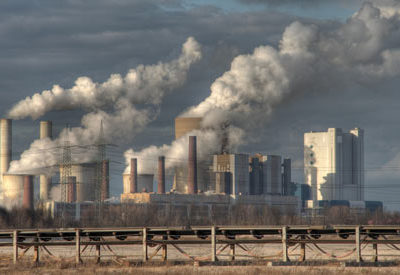
The hair-on-fire news this week was the Environmental Protection Agency announcing that it is repealing rules that limit planet-warming greenhouse gas emissions from power plants fueled by coal and fossil gas.
I saw the headline (“EPA Poised to Repeal Carbon Rules for Coal, Gas Power Plants“) on Sunday evening, when Zahra Hirji, Jen Dlouhy, and Ari Natter broke the news for Bloomberg. The EPA made the announcement the next day.
On its face, the move feels like a natural one for the Trump administration. “For over 15 years, the Obama and Biden administrations implemented a war on coal to destroy reliable and affordable energy,” EPA Administrator Lee Zeldin said in a statement. “The Trump Administration has come in to protect American energy and to make sure you can afford to keep the lights on.”
But that don’t make no sense, to quote the John Turturro line turned meme.
EPA’s own analysis that it just published contradicts the administrator, as Oliver Milman and Sarah Sneath report for the Guardian. “Retail electricity prices will actually be 0.7% higher in 2030, rather than lower, as a result of the administration’s rule change, it shows. Power prices won’t drop until the mid 2030s and beyond, the document states.”
There are many costs in fact. According to the Environmental Defense Fund’s analysis, the EPA’s final rule would create an estimated $1.0 trillion in health costs, over 80,000 additional premature deaths, and more than $1.8 trillion in cumulative climate-related harms through 2047. Today, a bunch of environmental and health advocacy groups, led by the American Lung Association, filed a petition for review, challenging EPA’s final rule.
EPA also says it is taking a separate but related step to try to prevent future administrations from regulating climate pollution from power plants. “The move could define federal climate policy well beyond Trump 2.0, as Axios put it. That separate proposal claims EPA lacks Clean Air Act authority to regulate power plants’ CO2 emissions “in response to global climate change concerns.”
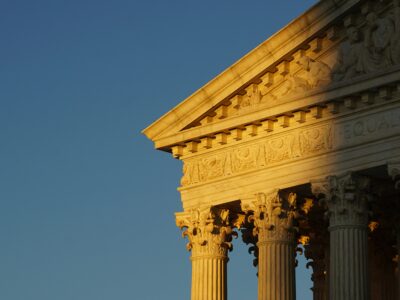
But wait, did you just say EPA lacks Clean Air Act authority? Such a retreat could further complicate the administration’s upcoming effort at the Supreme Court to help derail accountability lawsuits seeking to make oil producers pay for climate change, Lesly Clark reports for POLITICO. Because there, the administration has made its Clean Air Act authority central to its argument against climate lawsuits proceeding in state courts. You can try to make it make sense, but don’t try too hard.
As for coal, the Environmental Protection Agency has taken to using Trump’s preferred term “clean beautiful coal.” The administration has invoked an “energy emergency” to try to open new coal plants and to force aging facilities to stay open, which could cost ratepayers anywhere from $3 billion to $6 billion a year if as many as 90 plants were subjected to such orders. These coal plants, which had fallen out of favor because of deadly mercury and sulfur dioxide pollution, are staying open even when it doesn’t make ecomonic sense. I guess that makes sense in the context of end times fascism.
But hold on, some sense was made this week. The Department of Energy got smacked down by a federal appellate court for ordering a dirty, 64-year-old coal-fired power plant in Michigan to stay open past its planned retirement date. That J.H Campbell plant is one of several around the country that the Trump administration has forced to stay in operation, Kate Yoder reports for Grist.
The U.S. Court of Appeals for the D.C. Circuit rejected arguments about the so-called energy emergency, with Appeals Court Judge Cornelia Pillard writing that the emergency statute “is essentially a narrow, last-resort backstop.”
“The Department’s reading of ‘emergency’ invites frequent federal interventions that are unsupported by the statute,” the opinion says, “and threaten the stability of the energy market.”
Welcome to The Drain, a roundup of environmental and climate news from Legal Planet. This week’s song is “Nothing Left” by the Linda Lindas, which is one of 500+ songs on my climate playlist (on Spotify and Apple Music).
METHANE

UCLA’s STOP Methane Project released a report on super-emitters in the U.S. to some fanfare this week.
“Methane Made in America” includes user-friendly rankings of methane super-emitters detected by satellite in the Permian, Appalachian, and Haynesville-Bossier basins, which account for roughly two-thirds of U.S. natural gas production and export the most LNG to Europe. The report puts a spotlight on the Top 10 sites ranked by average emission rate. The Guardian has a big story on the top site, a Shreveport facility located in Red River Parish, Louisiana.
As I wrote last week, this matters because methane is a potent greenhouse gas that is responsible for about 30% of current global warming, so reducing methane is often referred to as pulling an “emergency brake” on climate change. “Now’s the time for smart regulation that helps incentivize and ensure cleaner gas,” my Emmett Institute colleague Mary Nichols said in our announcement. “Europe has begun down that road and should continue.” Will it?
“Europe can, must and will stay the course on our climate targets,” Ursula von der Leyen said this week in her State of the European Union speech. As EDF Europe’s Léa Pilsner notes, “EU Methane Regulation is where that commitment is being tested. Oil and gas industry groups, alongside several Member States, are pushing to weaken or delay rules that were backed by a broad majority when they were agreed.”
A new Fieldnotes investigation based partly on internal trade association materials, focuses on how the oil & gas industry has continued to work behind the scenes to undermine methane regulations during the second Trump administration.
And new MethaneSAT data analysis offers insights into the outsized, significant methane pollution from marginal wells — the hundreds of thousands of low-producing oil/gas wells across the US. “The analysis reveals outsized methane emissions from low-producing well-pads.” And yet, legislation now before Congress “would move in the opposite direction by exempting most of these wells from federal safeguards designed to prevent methane waste and air pollution, and there is mounting evidence that the U.S. EPA plans to weaken standards for this class of wells,” writes Jon Goldstein.
LEGISLATION
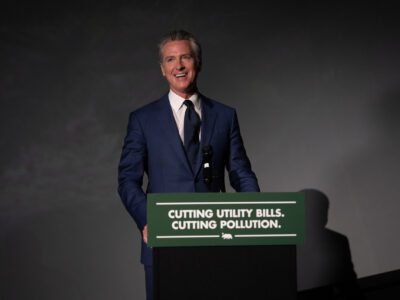
In California, everyone is waiting on Gov. Gavin Newsom one last time.
Yesterday, Newsom signed a pair of bills (AB 1642 and AB 1795) to create “first-in-the-nation standards” to test and remediate homes damaged by wildfire smoke, and to require insurance companies to pay for the associated costs. He made the announcement backed by wildfire survivors in Altadena, the LA Times reports.
Still awaiting his signature is the Home Energy Choice Act (AB 2313), authored by Assemblymember Marc Berman. If signed, this legislation would offer California homeowners the choice and the support needed to electrify their homes. The UCLA Emmett Institute wrote an analysis of the bill last year.
SB 1359, titled the Natural Gas Ratepayer Protection Act (authored by Senator Henry Stern), presents another gain for ratepayers, my Emmett Institute colleagues write. “The Natural Gas Ratepayer Protection Act is a bill that would create greater transparency around the investments gas utilities are making.”
SB 905 is this year’s big affordability reform package from state Sen. Josh Becker, according to Jeff St. John’s great new California Wire newsletter. The bill would curb utilities’ profits on wildfire-prevention investments and other spending that reduces their risk exposure.
AB 868 aka the Balcony Solar bill is awaiting Newsom too. Just let Sammy Roth buy some solar panels already! The bill “would allow renters and homeowners to buy balcony solar panels from retailers like IKEA or Home Depot and plug them in without applying to their electric utility for an interconnection agreement — a costly and potentially time-consuming requirement,” Roth explains at Climate Colored Goggles. It’s one of dozens of these bills nationwide.
SB 1153, would clarify that public water agencies do not have a duty to design, build or maintain a water system for wildfire defense or suppression, and that the inability to maintain water supply or water pressure during a wildfire is not a “substantial cause” of fire damages.
SB 222, the Heat Pump Access Act, would replace a patchwork of requirements across roughly 600 jurisdictions with a simpler statewide standard.
And AB 1738, the Remote Virtual Inspection Act, aims to streamline the inspection process for select home improvement projects by giving homeowners the right to request an established time-saving approach: remote virtual inspections.
Turning to Congress (sorry!) The House voted late Tuesday evening to block California from setting strict limits on harmful air pollution from ships docked at state ports, Maxine Joselow reports for NYT. The rules would (GASP!) require ship operators to turn off diesel engines and plug into local power grids while docked. To be clear, the legality of the various efforts to claw back waivers is in dispute.
The House nearly unanimously approved a bill Wednesday that aims to have artificial intelligence data centers pay for their substantial energy needs. AP reports that the legislation would require state utility regulators “to consider a standard by which utilities charge data centers for the full cost of the new power and transmission upgrades needed to serve them.” The bill passed by a vote of… 417-3.
And the House Judiciary Committee was set to hold a markup on legislation that aims to give Big Oil companies sweeping immunity from accountability lawsuits like the one headed to the U.S. Supreme Court next month. But the bill apparently stalled and was not brought up, according to the Center for Climate Integrity, which has organized a campaign against the bill.
Under the Trump administration’s new interpretation of well-established legislation — the Endangered Species Act — the accidental killing or injury of an animal would no longer be considered illegal, Caitrin Einhorn reports for the New York Times. Such a could have massive implications for energy development on federal land, Canary Media notes.
Most states that have ambitious climate goals and legislation must decrease emissions 4 to 6 percent per year to hit their 2030 goals and most states are not on track, according to an interactive report from the New York Times’ Upshot.
In New York City, the vast majority of the buildings required to slash their carbon footprints have done so or taken steps to, according to a report the Department of Buildings submitted to the City Council this week. “But, unfortunately for many property owners, the hard part is yet to come,” writes The City Reporter. Stricter climate mandates go into effect in 2030 through Local Law 97.
In Virginia, the largest electric utility, Dominion Energy, is putting that state’s climate law (the 2020 Virginia Clean Economy Act earlier ) to its toughest test yet. Canary Media reports that Dominion is proposing to build one of the nation’s biggest natural gas facilities, even though the statute prevents new fossil fuel plants and says all of them must shut down within two decades.
MEDIA
The Yale Program on Climate Communication typically divides Americans into “Six Americas” for the purposes of explaining public opinion about climate change. In a new report focused on social media, Yale finds that “across Global Warming’s Six Americas, the most commonly visited social media platforms are YouTube, Facebook, and Instagram.” So, no, your Bluesky account is not reaching broad American audiences.
An informative and very cool climate reporting collaboration called “Betting the House” launched today. With support from Covering Climate Now, four independent journalists are telling stories from different states about what climate-fueled extreme weather means for the places we call home. Emily Atkin (HEATED), Chase Cain (Chase What Matters), Rachel Ramirez (The Confluence) and Tracy Wholf (WereWHOLF Media) are all contributors. Ramirez investigates O’ahu, Hawai’i’s disappearing shoreline. Atkin investigates what home buyers are being told about climate risk in Miami, by posing as one.
Point Source is a new reporting project of the Center for Climate Integrity covering climate accountability that has grown out of the former Substack ExxonKnews. It’s helmed by Emily Sanders and Rebecca Leber.
Sanders btw is moderating a fabulous-looking panel webinar on Sept 23 regarding the Suncor v. Boulder case that’s headed to the Supreme Court — which will include my UCLA Law colleague Alejandro Camacho.
The McClatchy newspaper chain gutted its newsroom from Miami to Sacramento this week in what’s been dubbed the “McClatchy Massacre,” Status reports. Layoffs affected 13 newsrooms across the country, including the Idaho Statesman, Lexington Herald-Leader, Charlotte Observer, and Fresno Bee. No word on how many were environmental reporters, but it’s a safe bet that the downsizing will mean fewer local environmental stories.
This Sunday, the LA Dodgers play the SF Giants at Dodger Stadium and it’s a Big Oil sponsorship double-header. Both teams are prominently sponsored by 76 gas, owned by Phillips 66. Activists opposed to greenwashing in major league sports are joining forces with community groups fighting the impacts of urban oil drilling to hold a protest at Dodger Stadium 11am-Noon.
The Daily Show (finally) covered solar geoengineering and did it with a Breaking Bad spoof called “I Cool the Earth with Balloons.” The Daily Show’s Michael Kosta sits down with Make Sunsets founder Luke Iseman, who’s “taking the fight to climate change with the power of sulphur-filled balloons.” Kosta also speaks with climate experts Shuchi Talati and David Keith to try to make some sense of the “cooling credit” scheme, which Iseman claims has 1,700 customers.
DATA CENTERS + ENERGY
Americans have grown more concerned about the environmental impacts of artificial intelligence over the last year, according to a new poll from The Associated Press-NORC Center for Public Affairs Research and the Energy Policy Institute at the University of Chicago. The survey data say about half, 53%, of Americans are “extremely” or “very” concerned about artificial intelligence’s environmental impacts. That is up from 41% last year.
The Gilroy City Council on Monday night backed a temporary freeze on new data centers in the city while more comprehensive rules are developed for such projects.
Why don’t we pay for utility distribution lines the way we pay for roads? asks Severin Borenstein in a new Haas blog post. “As we face growing fixed costs of electricity distribution and the increasing imperative of electrification, it’s time for policymakers to recognize that the way we pay for electricity distribution needs a major overhaul.”
FORESTS
The Trump administration is trying to repeal the longstanding Roadless Rule, which protects national forest lands from logging and new roads, and one of the justifications is to reduce wildfire risk. But new research from the University of Oregon and Oregon State University shows that fires haven’t burned significantly more in roadless areas than in developed forest areas across the West, the Salt Lake Tribune reports.
UCLA’s Marius von Essen has a fascinating article at Legal Planet based on his research about how groups on the frontlines fighting deforestation are held back by institutional constraints – not just technological barriers. That’s the crux of a new study from UCLA, NYU, World Resources Institute, and the Governors’ Climate and Forests Task Force.
UNDP has published a new set of resources on “key topics related to high-integrity carbon markets” from simple explainers to country guidance documents.
About Evan

Evan George is Director of Communications for the UCLA Emmett Institute, a leading environmental law center. He also writes The Drain, a weekly roundup of environmental a…
READ more
Reader Comments