

























































Climate at SCOTUS, Electrification Victories, Media Moves
The Drain is a regular roundup of environmental and climate news from Legal Planet.

It’s not every year that climate change looms large at the U.S. Supreme Court, but it will this coming term.
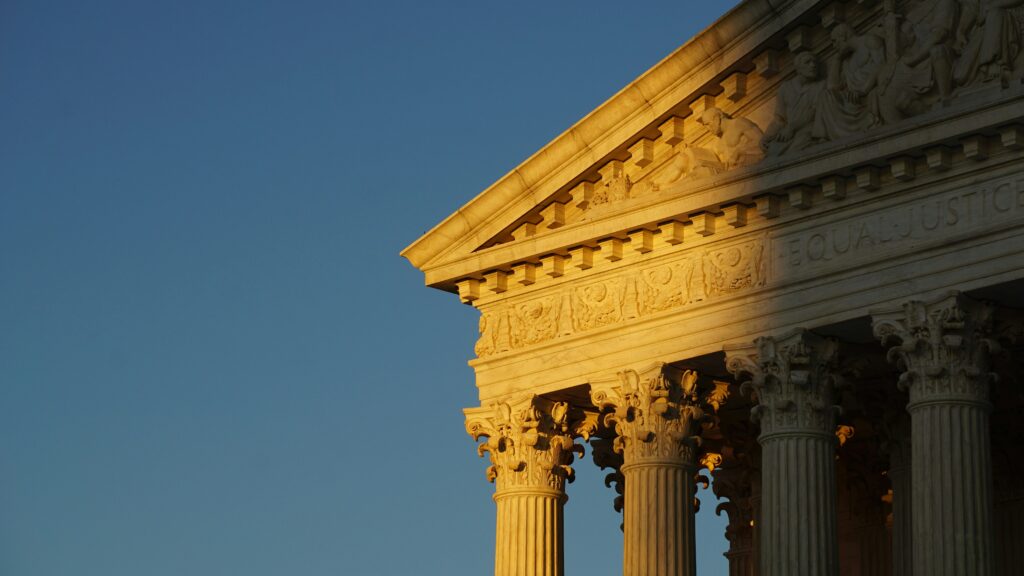
The Supreme Court will begin its 2026-2027 term with a case brought by a Colorado county seeking millions of dollars from oil and gas companies for their role in exacerbating climate change. The justices announced recently that they will hear argument in Suncor Energy v. County Commissioners of Boulder County on October 5, the first hearing of the term. Depending on the outcome, the case could limit how states can hold oil companies responsible for climate change.
The city and county of Boulder, Co., have filed a brief for respondents in the case. “Petitioners are impatient,” the brief says, and goes on to paint fossil fuel interests as trying to circumvent Congress and state courts by running to the justices.
Last week, Suncor Energy and Exxon Mobil filed their petition for a writ of cert arguing that federal law precludes state-law claims seeking relief. “State courts and parties are devoting enormous resources to the litigation of these cases, and the energy industry is facing the threat of damages awards that could run into the billions of dollars,” they write.
A new report from the National Academies of Sciences provides a comprehensive assessment of the current capabilities of extreme event attribution — and NRDC cites the report in a new amicus brief urging the Supreme Court not to thwart state-law cases against oil companies for climate damages.
Another interesting amicus brief in the case comes from my Legal Planet colleague Dave Jones, former insurance commissioner for the largest insurance market in the United States (California). “I submitted this brief to the US Supreme Court to make clear: The biggest threat to insurance and the hundreds of millions who depend on it isn’t from climate accountability lawsuits, but from climate change itself,” Jones writes at LinkedIn. “It’s high time insurers end their support of the fossil fuel industry and work instead to help curb the climate risk that is driving the insurance crisis across the country.”
As my UCLA Emmett Institute colleague Cara Horowitz has pointed out previously, the fact that this case comes on the tails of the Trump Administration’s Endangerment Finding rescission makes the case more complicated. UCLA Law Professor Alejandro Camacho has a forthcoming essay on the subject titled “The Polluter-Pays Principle and its Enemies,” which makes the case that the Constitution does not shield polluters from paying for the harms they cause. “The claim that the Constitution’s allocation of foreign affairs authority to the federal government preempts such suits misreads relevant precedent, has no limiting principle, and has been rejected by the courts that have considered it,” Camacho and a co-author write. Stay tuned for more previews and coverage of the arguments from Legal Planet.
Welcome to The Drain, a (nearly) weekly roundup of environmental and climate news from Legal Planet. Our song of the week is “Mother Nature’s Killing Spree” by Chloe Slater. I’m back from a long vacation, but I’ve still been adding songs to my Climate Playlist, which is now more than 500 songs. Listen on Apple or Spotify.
MORE LITIGATION
Good news on electrification from Illinois: A federal judge ruled late last month that Oak Park ’s ordinance requiring new buildings and residences to be all electric rather than run by fossil fuels is not preempted by a federal law, rejecting a legal challenge from a coalition from the fossil gas industry. The Chicago Tribune reports that U.S. District Court Judge Franklin U. Valderrama upheld Oak Park’s ordinance.
That decision “joins a growing consensus of courts around the country that have recognized that local authorities like the Village of Oak Park have the authority to pass common sense legislation that reduces air pollution in our homes and schools, and helps address the climate crisis,” Earthjustice lawyers said.
There was also good news in the 10th Circuit in a case called Restaurant Law Center v. Denver, where Denver won its bid to keep its building electrification laws. The District of Colorado upheld Denver code provisions requiring electrification for certain uses. The court granted the City and County of Denver’s Motion to Dismiss and Sierra Club’s Motion to Dismiss First Amended Complaint. (h/t Daniel Carpenter-Gold.)
Over at the D.C. Circuit Court of Appeals, that court has (once again) blocked the Trump administration from rescinding billions in climate funds issued under the Biden administration’s signature Inflation Reduction Act (IRA).
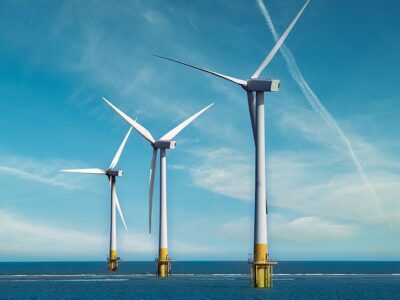
And a federal judge in Portland, Oregon indicated she was likely to find in favor of a coalition of renewable energy groups and order the Trump administration to resume reviewing wind projects. A couple days later, Judge Karin Immergut of the U.S. District Court for the District of Oregon, who was appointed by Trump, did indeed rule that the renewable energy groups were likely to prevail on the merits and issued a preliminary injunction. NYT’s Brad Plumer reports that “the court has ordered the agency to restart reviews for a wide range of projects and follow legal deadlines.”
MEDIA MOVES
Great media news! The LA Times podcast “Boiling Point” is back for a second season and investigative climate reporter Miranda Green is the host. Green is the author of Atmos Magazine’s weekly newsletter, The Understory, and publishes her own climate focused Substack called “Evergreen.” Previously she was the National Investigative Reporter at Huffpost and the Director of Investigations at Floodlight News, where she oversaw the nonprofit newsroom’s national investigative team and reported and edited climate focused series.
Episode One of the new season is a look at the long oil drilling saga off the coast of Santa Barbara, which LAT’s Grace Toohey has been reporting on for a couple years now.
Bad news from Washington: The Trump administration will end support for NOAA’s Arctic Report Card, a major annual scientific report that documents how climate change is affecting the Arctic (the region most heavily affected by rising temperatures) Zack Colman reports for POLITICO.
LAist has a new climate reporter: Lucas Brady Woods has been hired to cover weather, disasters and other topics related to climate and science (while science reporter Jacob Margolis is on a one-year investigative project as a ProPublica fellow). Woods previously covered the Colorado State Capitol, elections and Colorado’s Congressional delegation for KUNC.
The Wave, a climate litigation newsletter, is currently looking for pitches from freelance journalists on the climate and courts beat.
POLITICO editors shared their launch plans for Surge, a new global newsletter “covering the political and policy implications of rapidly rising electricity demand.” It launches Aug. 31.
Bill McKibben’s newsletter “The Crucial Years” turned 5 years old this week. He reflects on the crucial years passing us by and the achievements worth celebrating.
In an interview with The Wall Street Journal’s James Taranto, Justice Samuel Alito shared news of his non-retirement and reflected on his judicial method.
ENERGY
Amazon is backing what could be the largest fossil gas power plant ever built in the U.S., according to Michael Thomas at Cleanview. It has acquired a site in Pecos County, Texas, where it plans to build a massive AI data center campus powered by on-site natural gas generation. Sen. Chris Van Hollen (D-Md.) called it “another example of why we need legal guardrails” on data center development, and touted his bill that would create new federal rules, Axios reports.
An NYT feature by Hiroko Tabuchi looks at how the nationwide push for data centers is driving a boom in gas-burning power plants, especially in Texas. “If built as planned, the gas burning plants — scattered across states including Texas, Ohio and Wyoming — could release as much planet-warming pollution in a year as roughly half of all the passenger vehicles in the United States.”
Meanwhile, Texas Gov. Greg Abbott announced a moratorium on the approval of data centers until regulatory agencies can “audit” proposed data centers seeking connection to the state’s electric grid.
James Sallee at UC Berkeley takes a close look at the Trump Administration’s $3.9 billion in lease buyouts to offshore wind developers and finds that they are bad policy but far from the only thing delaying deployment. “As of today, it seems as though the government just spent $3.9 billion of taxpayer dollars spent to shoot a corpse.”
Eight of the biggest oil companies amassed profits of more than $90 billion in just three months as the war on Iran sent energy prices soaring, Damian Carrington reports for the Guardian. Exxon and Chevron are making “too much money,” Trump said at the White House on Monday, and they “better cut the retail price.”
“These profits are absolutely obscene,” state Sen. Josh Becker told Blanca Begert at the LA Times. Becker and Sen. Ben Allen introduced a bill to give the state attorney general the power to prosecute price gouging in wartime.
PJM Interconnection has finally settled on a plan to prevent data centers from causing other customers’ utility bills to soar further in its 13-state territory. The PJM Board of Managers directed PJM to file two proposals with the Federal Energy Regulatory Commission. PJM “wants states and utilities to hold data centers responsible for buying their own power — or risk being cut off from grid service,” Canary Media writes.
In fact, more than 530 municipalities have slapped new restrictions on server farms, according to a recent Heatmap analysis that editor Robinson Meyer wrote about.
LEGISLATION
Conventional wisdom says that the Democrats’ Inflation Reduction Act failed to become popular with voters and then died. That’s wrong according to Leah Stokes who has a new article in the Atlantic in which she argues that “the law did, in fact, deliver votes for Democrats.” She and a co-author found that in 2024 clean-energy manufacturing lifted Kamala Harris’s vote share by roughly 1.5 percentage points—a swing of 2.5 million votes across the 234 districts. Stokes has a forthcoming book called “The Carbon Wave.”
The American Legislative Exchange Council (ALEC) is pushing sweeping model legislation that would “close courthouse doors to consumers and communities seeking to hold Big Oil accountable for climate deception,” according to Consumer Watchdog. This model legislation is called the Energy Producers and Consumers Protection Act.
METHANE
A major investigation by the Center for Climate Integrity finds that the gas industry ignored its own internal scientific warnings about methane. “Knowing that the expansion of natural gas would create air pollution and increase atmospheric levels of both methane and carbon dioxide, it worked to undermine these concerns, position gas as the clean and climate-friendly alternative to coal, and realize an ambition that would transform natural gas from a marginal fuel to a driving force of the energy sector,” the report says.
Trade groups told the NY Times that the report was “the latest in a coordinated campaign” against an industry it said was vital to the American economy.
BP said last week that it’s planning to sell its biogas unit called Archaea, which captures and sells gas from landfills and dairy farms just four years after buying it for $4.1 billion. Axios calls it “a major move in BP’s pivot back to its core oil and gas business.”
CALIFORNIA + LOS ANGELES
Gov. Newsom is rolling out a wildfire liability proposal during the final few weeks of this year’s legislative session. A coalition of environmental and consumer advocates pushed back in a letter.
In the upcoming California gubernatorial election (Did you forget there’s still an election? I almost did) Republican candidate Steve Hilton says he wants to “break up [Pacific Gas & Electric’s] monopoly,” according to a policy proposal on his website titled “Ending the PG&E nightmare.” That shows the former Fox commentator positioning himself more like former Democratic primary candidate Tom Steyer on the topic of utilities than the current Democratic candidate Xavier Becerra.
POLITICO’s Alex Nieves recently discussed gubernatorial frontrunner Becerra’s doubts about the state’s ambitious climate goals on the POLITICO Energy Podcast.
Three years ago, regulators discovered garbage burning deep inside the Chiquita Canyon Landfill in the Santa Clarita Valley. Now it turns out that hot temperatures have overtaken at least 30 acres of El Sobrante landfill in Riverside County and unusual emissions have been detected at Avenal landfill in the San Joaquin Valley, Tony Briscoe reports for the LA Times. “How many landfills are dealing with these disasters?” he writes. “Are they a broader problem in California?”
The Eaton Fire was caused by Southern California Edison equipment, according to two reports released last Tuesday by the L.A. County Fire Department.
California, Arizona and Nevada will be required to slash their water use from the drought-stricken Colorado River by 16 to 20% through 2028, under a 10-year federal plan just released. The Bureau of Reclamation’s final environmental review “leaves the door open for states to reach an agreement on how to share the water — and for legal battles,” High Country News reports. No mandatory cuts are expected in the upper basin states of Colorado, Wyoming, Utah and New Mexico, CalMatters writes.
California generated more than half its electricity from the sun in what is believed to be a global first, according to an analysis of federal data.
Scientists in LA and San Diego are building a “biolibrary,” which will be housed at the L.A. County Natural History Museum. LAist reports that it will help them better track the effects of climate change on a sensitive and beloved ecosystem.
RIP Jackie. Big Bear’s beloved bald eagle Jackie (arguably the world’s most famous bald eagle, the LAT writes) died Monday from a mysterious illness at an Ojai rehabilitation center. She was 14. USA Today ran a photo essay of Jackie through the years.
Reader Comments
One Reply to “Climate at SCOTUS, Electrification Victories, Media Moves”
Comments are closed.

About Evan

Evan George is Director of Communications for the UCLA Emmett Institute, a leading environmental law center. He also writes The Drain, a weekly roundup of environmental a…
READ more
No offense, but isn’t it true that natural gas is lower emission than coal? Making it “friendlier” if not actually friendly.
Are we wasting too much energy on these lawsuits, when a refundable carbon tax might work better anyway? I know we are in a bad moment nationally right now, but I can’t believe most conservatives care nothing for the climate. We need to go talk to them.
Although I suppose we could pursue both strategies at once.