


























































Region: National
An Ounce of Prevention
Can inherently safer technology save us from chemical accidents and terrorists?
As Benjamin Franklin famously said, “an ounce of prevention is worth a pound of cure.” Franklin’s comment, originally made in reference to home fire safety, is characteristically timeless. Today, many are looking to the principle of prevention as a way to reduce the incidence and severity of chemical plant disasters. The threat of chemical disaster …
Continue reading “An Ounce of Prevention”
CONTINUE READINGClimate Standing with a Twist
Rather than prove they will be specifically harmed by increased carbon emissions, plaintiffs can use other kinds of harm as a basis for climate standing.
Plaintiffs got a Christmas present from the D.C. Circuit in the form of a pathway to prove standing in climate change cases. The Supreme Court has considered two cases dealing with standing to sue based on injuries caused by climate change. The Court found standing in one case 5-4 and split 4-4 in the second …
Continue reading “Climate Standing with a Twist”
CONTINUE READINGTen Energy Stories to Watch in 2014

What will shake the energy world this year?
In our energy law classes at Cal, we like to start the day by talking about Energy in the News. The media never fails us. Every day, there are multiple energy-related stories of significance touching on resource development, new technologies, policy shifts, jobs, regional politics, prices, international relations, or the environment. Once you start looking …
Continue reading “Ten Energy Stories to Watch in 2014”
CONTINUE READINGThe Food Safety Paradox

As Tom McGarity documents in his recent book, Freedom to Harm, the American food safety system is in disarray. You’d think we’d all be wiped out by food poisoning. Yet, the rate of sickness caused by bad food seems to have remained constant since the mid-nineties. What’s going on? McGarity and others are right about the …
Continue reading “The Food Safety Paradox”
CONTINUE READINGThe Quiet Failure of Climate Denial in 2013

2013 Wasn’t A Good Year for the Opponents of Climate Science
The latest IPCC report proves that scientists are unwavering in their view that human carbon emissions are causing dangerous climate change. In the scientific world, climate denial has no traction. It isn’t gaining traction in the judicial or congressional worlds either. First, the judiciary. A three-judge panel of the D.C. Circuit, headed by a conservative …
Continue reading “The Quiet Failure of Climate Denial in 2013”
CONTINUE READINGNew on Ecology Law Currents

Ecology Law Currents, ELQ’s online companion, features lively short-form commentary. Check out the latest, an analysis of California’s cap-and-trade program. Author Penni Takade argues that the program has two key weaknesses: The first weakness is the process of allocation for GHG allowances to regulated firms. Under California’s allocation process, cap and trade will exacerbate economic …
Continue reading “New on Ecology Law Currents”
CONTINUE READINGEco-Friendly Gift Guide

Gift Ideas to Keep Your Holidays Green
To celebrate the holiday spirit, here are some gift ideas for your eco-savvy friends and family. May your holidays be warm (but not too warm) and bright. For the foodie: An “Eat Local” calendar For the techie: A portable solar charger For the minimalist: The gift of carbon offsets For the chef: A reclaimed wood …
Continue reading “Eco-Friendly Gift Guide”
CONTINUE READINGGoing for Broke at the Climate Casino

The new Nordhaus book is good as far as it goes. But its analysis is muddled in crucial respects.
I finally had a chance to read Nordhaus’s new book, The Climate Casino, on a long flight. There are some goods lessons in the book. The book makes the case for serious mitigation, even rhough Nordhaus takes a fairly optimistic view about adaptation. Nordhaus also tells us that “it would be relatively inexpensive to slow …
Continue reading “Going for Broke at the Climate Casino”
CONTINUE READINGWhy Pollution Regulations Aren’t Taxes
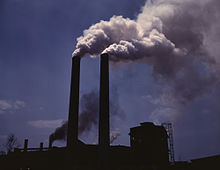
Opponents of environmental regulations love to call them hidden taxes. But constant repetition doesn’t make this idea true.
If you’ve seen a statement that regulations are hidden taxes, that’s not too surprising. Googling “regulation hidden taxes” produces over three million hits. But in fact, pollution regulations and taxes are completely different. The reason is simple. A tax removes value from the private sector. Environmental regulations simultaneously remove value from one part of …
Continue reading “Why Pollution Regulations Aren’t Taxes”
CONTINUE READINGA solar energy fight in Arizona

The rising political power of residential solar power
There’s a fight over renewable energy occurring in Arizona right now. The state’s largest public utility asked state regulators for permission to greatly increase the fees paid by homeowners who have solar power on their houses. The utility’s argument is that the increase in solar power produced by these houses is putting a burden on …
Continue reading “A solar energy fight in Arizona”
CONTINUE READINGJoin Our Mailing List
Climate policy is changing rapidly. Stay in the loop with expert analysis via email Monday - Friday.

The Drain is a roundup of climate and environmental news from Legal Planet delivered to your Inbox once a week.