


























































A Flash in the Pan or a Sea Change?
What do the elections tell us about 2028 and beyond?
Summary
Typically, midterm congressional elections don't predict the outcome of the next presidential election. That may be less true of this election, which could have a little more predictive value. The 2026 election also saw big shifts in elections for state governments. Changes in party control of state government could be more durable, if past experience is any guide.
You have to go back fifty years to find a parallel to the Democratic wave this November. The outcome certainly does not guarantee Democratic success in 2028. But it may be equally a mistake to dismiss the outcome as a flash in the pan. Given that Democrats are the party supporting climate action, it’s important to think through the longer-term implications. Those implications may be much stronger at the state level than the federal level.
As a Brookings analysis explains, “history shows that the midterms do not predict the results of the ensuing presidential election.” To take two examples: “Democrats lost more than 50 House seats in 1994, but Bill Clinton went on to win reelection easily in 1996. Democrats lost more than 60 seats in 2010, but Barack Obama’s standing rose in 2011-2012, and he won a comfortable reelection in 2012.”
I wonder, however, whether this year’s election might have a bit more predictive value. One reason that midterms and presidential elections are different is that turnout tends to be much lower in midterm elections. That means that the electorates are different mixes of voters. The turnout in the 2026 elections, however, was unusually high, which may reduce the significance of that difference. Another reason that midterms may be poor predictors is that Presidents who suffer big defeats in midyears typically recalibrate their positions. As his appointment of Stephen Miller as chief of state indicates, however, Trump seems to be doubling down on his already unpopular policies rather than recalibrating. Only time will tell what all this means for 2028.
A different aspect of the 2010 election proved much more durable. Republicans had had trifectas (control of both legislative houses and the governorship) in 10 states before that election and 22 states afterwards. In 2025, they still had 23 and Democrats had 15. Republicans used their newfound power in state government to enact sweeping legislation and provide themselves with a firm political base.
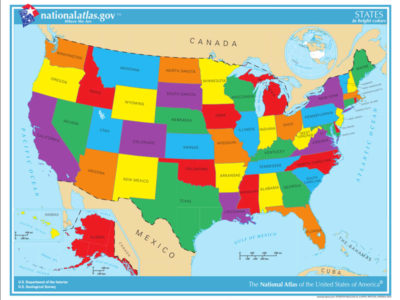
There were also major changes in state legislative control in the most recent election. Democrats gained trifectas in Michigan, Minnesota, Nevada, Pennsylvania, Arizona, and Wisconsin, while ending entrenched GOP trifectas in Georgia, Iowa, Ohio and Texas. That makes 19 GOP trifectas and 21 Democratic ones, breaking the pattern of one-sided Republican state dominance. Although the shift in control in 2026 was less dramatic than in 2010, it might prove equally durable.
It’s going to be difficult for congressional Democrats to make much progress on environmental issues against a hostile White House, although they may be able to curb some of Trump’s worst impulses. That means that the onus for pursuing environmental progress will be on the states. The 2026 election has clearly given Democrats a lot more to work with at the state level, and some of that shift may be lasting.
About Dan

Dan Farber has written and taught on environmental and constitutional law as well as about contracts, jurisprudence and legislation. Currently at Berkeley Law, he has al…
READ more
Reader Comments