

























































Trump Administration
Never Give Up! Every Ton of Carbon We Can Cut Still Matters
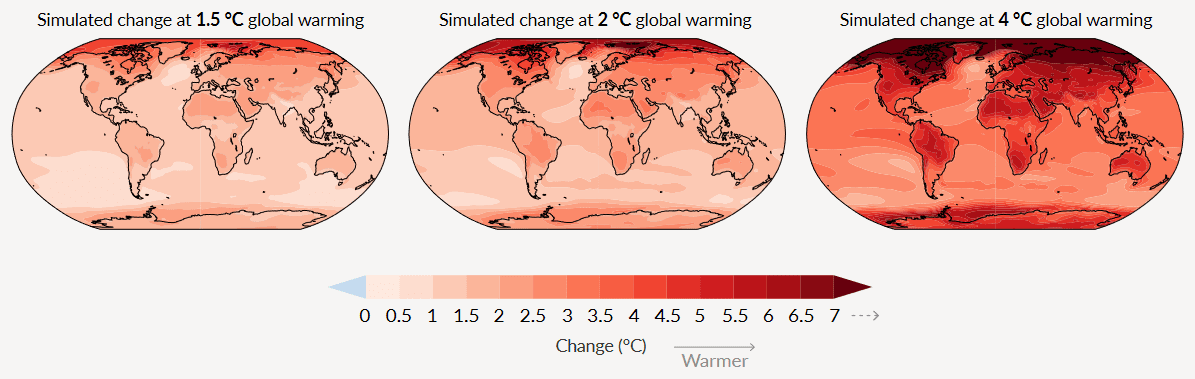
It’s easy to be disheartened when we miss climate targets. But climate change isn’t a yes/no thing. It’s a matter of degree.
It’s easy to lose heart about our prospects for limiting climate change. The US has pulled out of international climate negotiations. Most of the countries that joined the Paris Agreement have missed targets , targets that weren’t aggressive enough in the first place. The 1.5 °C target is already basically out of reach. Is time to give up on slowing climate change and focus on adapting to it? The answer is no. Here’s why.
Climate change is a matter of degrees. That sounds like a truism or a pun, but it’s true in a deeper sense. There is no point past which further warming becomes irrelevant. degree, and every fraction of a degree makes things that much worse.
Judicial Review of the Hegseth Gambit

Hegseth and the “God Squad” may have just stepped into a morass.
As expected, the Endangered Species Committee issued a blanket exemption, preventing any challenges to oil and gas drilling in the Gulf that threaten endangered species. Hegseth’s request for the exemption is premised on the existing (but possibly insufficient) protections that the government is currently giving endangered species. Thus, it’s not quite a license for Exxon to send out harpoon boats to kill off whales. It does, however, raise the suspicion that the current protections are grossly inadequate and that the government expected to lose in court, before in effect breaking the glass and pulling the red emergency lever.
CONTINUE READINGThe War and the Energy Transition

The Iran War it is hitting energy markets hard. Will that affect the energy transition?
The Iran War has been a big shock to the global energy system. It’s natural to wonder what the long terms will be. What it will lead to an orgy of oil and gas drilling, or will it speed up the energy transition? There are enormous uncertainties, and making confident predictions would be a clear mistake. In this post, I’ll try to unpack some of the issues and offer a semi-educated gas about the answers.
Challenging Hegseth’s National Security Gambit
Hegseth may not have as much power as he thinks to run roughshod over the Endangered Species Act.
According to a DOJ filing, “[o]n March 13, 2026, the Secretary of War notified the Secretary of the Interior that the Secretary of War found it necessary for reasons of national security to exempt from the ESA’s requirements all Gulf of America oil and gas exploration and development activities.” It’s difficult but not impossible to challenge the government on issues of national security. Hegseth’s demand for an exemption to allow oil companies to destroy endangered species is a bold, aggressive move, much like the decision to go to war against Iran. As with the war itself, however, the legal and political aftermath may prove a lot messier than the Administration is anticipating. Here are some possible arguments that could potentially limit Hegseth’s powers.
CONTINUE READINGThe Environment is a System, Not an Array.
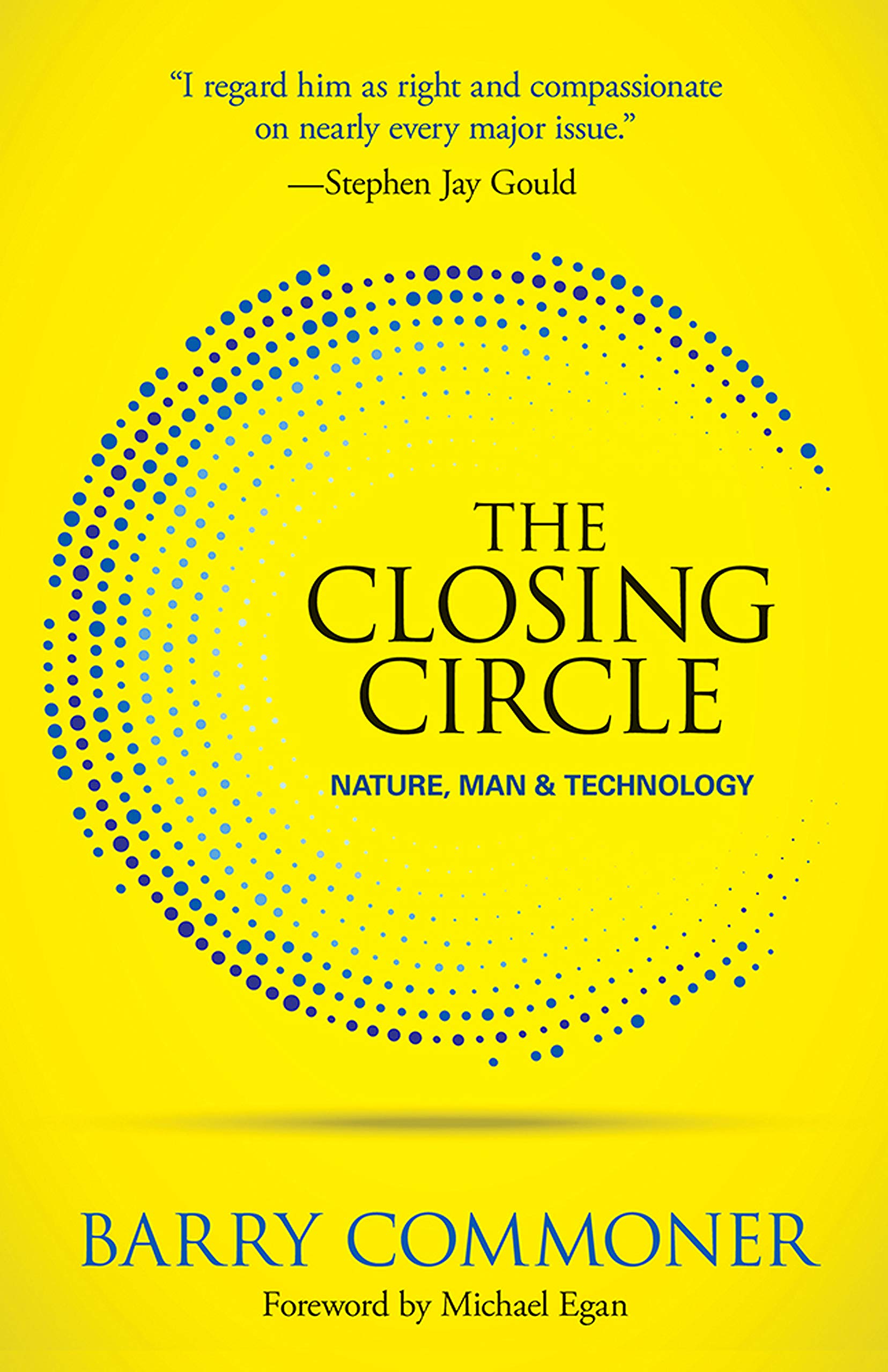
In 1969, Barry Commoner summed up much of environmental science in six words. Today’s conservatives don’t get it.
People have an intuitive tendency to focus on an action’s immediate direct effects. The same intuition leads us to downplay effects that are indirect, long-range, and cumulative. This can lead us astray, as it has the Supreme Court, when dealing with impacts on environmental systems. Writing at the outset of the modern environmental world, biologist Barry Commoner tried to crystalize what was known about the environment into four crisply phrased laws. The first law read simply: “Everything is connected to everything else.” What we have learned since Commoner published The Closing Circle in 1969 has only confirmed that insight.
This interconnected means that the environment is a system (really, a nested set of systems), where interactions are paramount. It’s not just an array of different things happening independently in different places or times. That’s true, as we’ve learned, not only of the environment but the global economy to which it is linked and of the geopolitical realm linked to that.
CONTINUE READINGHarming Species
The impact of repealing the ESA Section 9 prohibition on habitat destruction will be large for many endangered species.
As I posted last year, the Trump Administration is proposing to repeal an Endangered Species Act (ESA) regulation that limits destruction of habitat for listed species. Specifically, the proposal is to repeal the definition of “harm” in the regulations. That regulatory definition includes some forms of habitat destruction within the meaning of harm. And “harm” …
Continue reading “Harming Species”
CONTINUE READINGLaunching OPERATION EPIC FURRY

It’s time to rename the Endangered Species Act.
Environmentalists need to do better. at marketing Consider the Endangered Species Act. That’s an accurate but uninspiring name. Where’s the pizzaz? Where’s the spark? And the acronym ESA is just lame.The aspects of the law that appeal most to the public are its protections of iconic creatures like polar bears and cute creatures like black-footed ferrets. Why not take a leaf from Trump’s book and rebrand? Make it big, bold, and appealing: EPIC FURRY. Sounds thrilling! It could stand for Endangered Prized Innocent Creatures Flourishing Under Real Regulatory Yodas. The title doesn’t mean anything, but has a nice Star Wars connection, which never hurt anyone’s marketing. And what regulator wouldn’t like to be compared with Yoda the Jedi Master?
CONTINUE READINGSurprise Support for Solar

Solar power is on the Trump Administration hit list, but it turns out to have support in unexpected places.
ere’s a social media post whose content won’t surprise you:
“Solar power is the energy of the future.
“Giant fusion reactor up there in the sky – we must rapidly expand solar to compete with China.”
And from a political ally, a poll that found three-quarters of Trump voters in five states agreed that solar should be used “to strengthen and increase” the U.S. energy supply.
Who were those solar supporters?
Five Lessons from the Tariff Case
What can the case teach us about litigating environmental cases against Trump?
Learning Resources v. Trump, the recent tariff ruling, doesn’t say anything direct about environmental cases. But there are a series of useful lessons for environmental litigators. One obvious one is that the conservatives aren’t all “in the tank” for Trump (though Alito and maybe Thomas seem have gone pretty MAGA). Trump’s nasty insults of the conservatives who ruled against him probably won’t bring them back onto the Trump train. His effusive praise for the three conservatives who voted for the tariffs may even increase frictions within the supermajority. Here are five more lessons.
CONTINUE READINGDissecting EPA’s Endangerment Repeal: Series Wrap-Up:
Here’s what you need to know to understand the upcoming legal battles.
Yesterday was the last of five Legal Planet posts on EPA’s repeal of the Endangerment Finding, which it based on legal arguments that it has no power to regulate vehicle emissions of greenhouse gases. The series began with a quick overview of the issues. The remaining posts focus on the reasons that EPA was right to issue the Endangerment Finding in the first place in 2009, the legal precedents supporting the Endangerment Finding. and the impact of the repeal on future climate actions. The bottom line is that EPA was right to issue the Endangerment Finding and wrong to repeal it.
CONTINUE READINGJoin Our Mailing List
Climate policy is changing rapidly. Stay in the loop with expert analysis via email Monday - Friday.

The Drain is a roundup of climate and environmental news from Legal Planet delivered to your Inbox once a week.