

























































Climate Change
Netherlands Government Appeals Historic Climate Change Ruling

The Dutch Supreme Court will decide whether the government is obligated to cut emissions more
Last month, an appeals court in the the Netherlands upheld a lower court’s ruling that the Dutch government is legally obligated to reduce greenhouse gas emissions more aggressively. This drew much international attention, as well as praise from environmental advocacy organizations. As expected, the government has announced that it will appeal this decision in the Urgenda …
Continue reading “Netherlands Government Appeals Historic Climate Change Ruling”
CONTINUE READINGA Catalogue of Game Changers

We’re making progress on addressing climate change, and I’m hopeful that we’ll continue doing so. Yet it’s not clear whether the path we’re currently on will make progress fast enough to avoid very serious risks. So what would it take for us to make a quantum leap in this effort? I wouldn’t hazard a prediction …
Continue reading “A Catalogue of Game Changers”
CONTINUE READINGFrom the Wildfire Files
Wildfires are getting worse and worse. Here’s what we know about the situation.
I don’t normally do this, but given the terrible wildfires now hitting the state, I thought it was worth doing a reprise of some posts on the subject from earlier this summer. Of course, there’s more information in the original posts, if you want to click over to them. Spreading Like Wildfire In 2017, wildfires …
Continue reading “From the Wildfire Files”
CONTINUE READINGGuest Bloggers Deborah Gordon and Frances Reuland: Is California Extraordinary? Its Oil Resources Certainly Are
Facts About California’s Oil and Greenhouse Gas Emissions
Despite ongoing federal rollbacks to environmental regulations, California has the right to set its own clean air standards because it is truly extraordinary. Truth be told, the compelling circumstances that first set in motion California’s vehicle emissions standards remain entirely valid. And there are four recent conditions, related to California’s oil supply, production, and refining, …
CONTINUE READINGPost-election climate policy options
Options for newly empowered state governors, legislators and US House Representatives to advance climate policy
This post is co-authored by Dan Farber and Eric Biber. Democrats took control of the US House of Representatives in the election last week, took full control of six state governments (Nevada, Colorado, New Mexico, New York, Maine, and Illinois), took governorships in seven states (including Michigan, Wisconsin, and Kansas), and made significant gains in …
Continue reading “Post-election climate policy options”
CONTINUE READINGNew Report: Improving Landscape-Level Planning for Solar PV Development

New UC Berkeley/UCLA Law report details policy changes to help achieve new SB 100 renewable energy goals
A new report from UC Berkeley and UCLA Schools of Law, A New Solar Landscape, identifies key reforms for California to enact at the state, regional, and local level to increase the pace and optimal siting of utility-scale solar photovoltaic (PV) development. With the passage of SB 100 (de León, 2018), California now requires electric …
Continue reading “New Report: Improving Landscape-Level Planning for Solar PV Development”
CONTINUE READINGSessions Out, Whitaker In: What Might the DOJ Shakeup Mean for Environmental Enforcement?

¯\_(ツ)_/¯
News broke this afternoon that Trump has forced Attorney General Jefferson Beauregard Sessions III to resign — naming Sessions’ chief of staff, the Marbury v. Madison critic and sports take tweeter Matthew Whitaker acting AG. This move obviously has some pretty horrifying implications for the country at large, but it’s worth thinking about how the …
CONTINUE READINGWhat The 2018 Election Results Mean For California Climate Policy
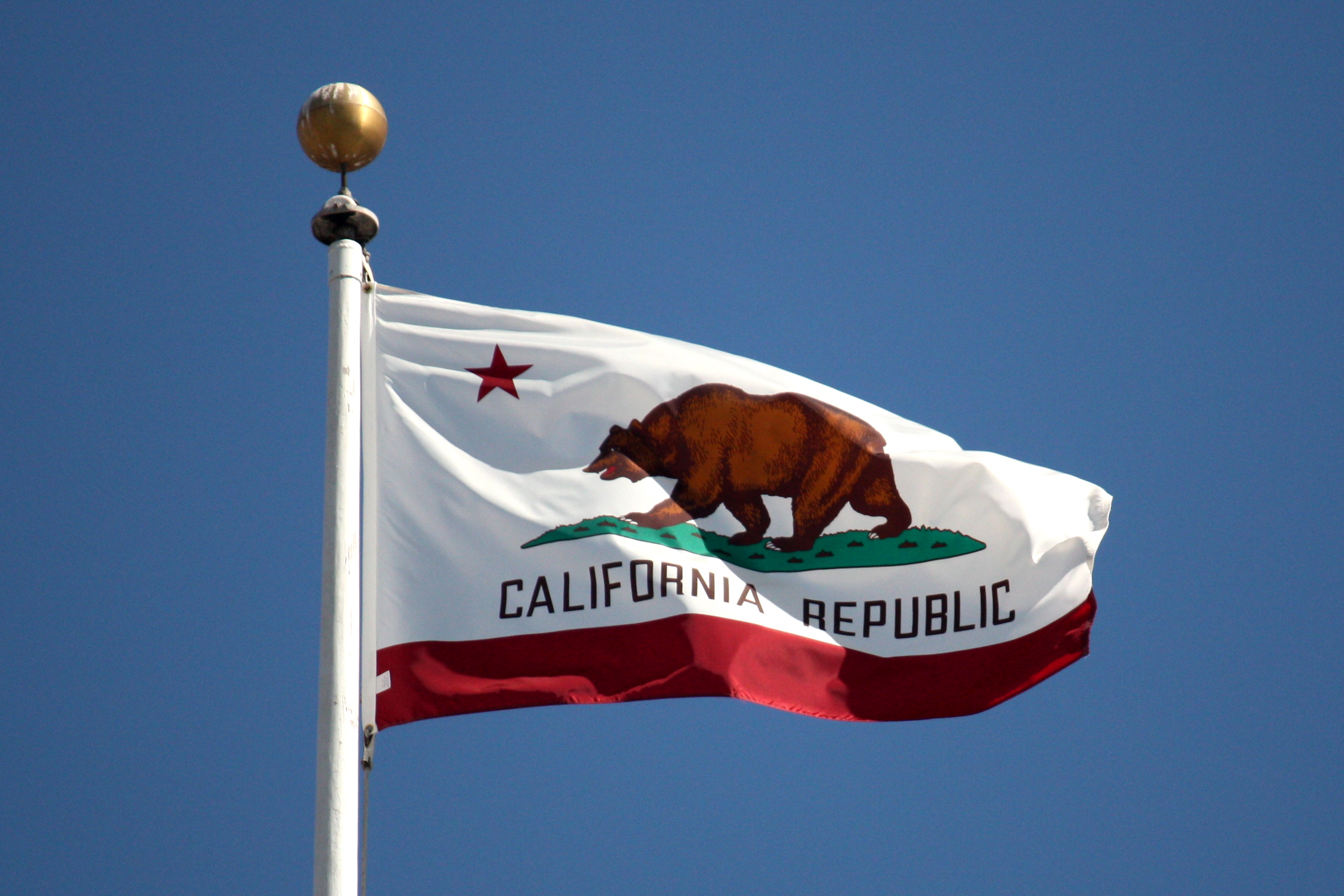
Big wins for state initiatives and pro-climate candidates, plus opportunities for high speed rail and cap and trade
Some big wins for California (and therefore national) climate policy last night: Lt. Governor Gavin Newsom is elected governor, which means the state will continue its climate leadership on various policy fronts Prop. 6 loses, which would have repealed the gas tax increase and meant less funding for transit going forward Prop. 1 wins, which …
Continue reading “What The 2018 Election Results Mean For California Climate Policy”
CONTINUE READINGSolar Geoengineering and International Law

May states intentionally alter the entire planet’s climate?
A couple weeks ago, I introduced solar geoengineering (see also 1, 2, 4 in the series). This is a set of proposed technologies that would reduce climate change by blocking or reflecting a small portion of incoming sunlight. It appears that it would be effective in reducing climate change, inexpensive, rapid, and technically feasible. It would …
Continue reading “Solar Geoengineering and International Law”
CONTINUE READINGMajor Policy Attacks on California’s Low Carbon Fuel Standard and Why They’re Off-Target
Second in a Series About California’s Low Carbon Fuel Standard Program
[Post co-authored by Ted Parson and Sean Hecht] In this post, we continue our discussion of California’s Low-Carbon Fuel Standard (LCFS), which we introduced in our post on October 4, 2018. Because it’s a prominent and ambitious policy that will reduce California’s reliance on petroleum-based transport fuels, it is unsurprising the Low-Carbon Fuel Standard has …
CONTINUE READINGJoin Our Mailing List
Climate policy is changing rapidly. Stay in the loop with expert analysis via email Monday - Friday.