


























































Federal Climate Policy
Eliminating the Endangerment Finding Doesn’t Mean the Government Can’t Regulate Cars and Trucks
The Clean Air Act and Energy Independence and Security Act still give EPA, California, and NHTSA significant power.
The withdrawal of EPA’s endangerment finding is bad in many respects that I don’t want to downplay and that many have already focused on. But it’s also worth stressing that, should a president take office in 2029 who cares about climate and air pollution from cars and trucks, the federal government — and California — …
CONTINUE READINGDissecting EPA’s Endangerment Repeal: Series Wrap-Up:
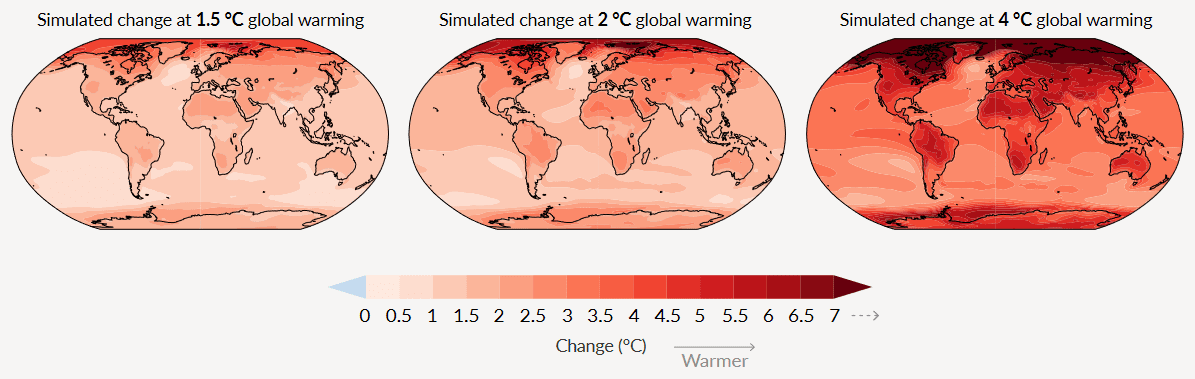
Here’s what you need to know to understand the upcoming legal battles.
Yesterday was the last of five Legal Planet posts on EPA’s repeal of the Endangerment Finding, which it based on legal arguments that it has no power to regulate vehicle emissions of greenhouse gases. The series began with a quick overview of the issues. The remaining posts focus on the reasons that EPA was right to issue the Endangerment Finding in the first place in 2009, the legal precedents supporting the Endangerment Finding. and the impact of the repeal on future climate actions. The bottom line is that EPA was right to issue the Endangerment Finding and wrong to repeal it.
CONTINUE READINGHas Trump Actually “Driven a Dagger Through the Heart” of Climate Policy?

Lee Zeldin
Don’t jump to conclusions based on the Administration’s spin operation.
there’s a good chance that the repeal of the Endangerment Finding will be reversed by the courts. That would ground federal climate policy even more firmly in the law, so the Administration is taking a gamble. Saying they’ve one is as premature as a roulette player who’s just put all their chips on one number announcing that they’re now rich before the wheel has even started turning. Even if the courts do uphold the repeal, a lot will depend on just what legal theory the judges adopt. Some legal theories would slam the door on efforts by future Democratic presidents. Others would leave room to move forward.
CONTINUE READINGWhat Happens to State Regulation if the Endangerment Findings are Gone?

Answer: State authority wouldn’t suffer from the change and might expand in some ways.
If the Trump EPA successfully repeals the endangerment findings for vehicles and stationary sources, states will be the only resort for climate regulation. A key question is how the repeals would impact state power to regulate carbon emissions. The bottom line answers are: (1) the impact on state power regulate tailpipe emissions seems unclear but could be positive, (2) there would be no effect on state power to regulate stationary sources like power plants, and (3) plaintiffs suing oil companies would probably benefit. The detailed analysis is below.
CONTINUE READINGThe Tariff Decision and the Major Questions Doctrine
The scope of the doctrine is even more confused now than before.
The tariff decision is good news in terms of checking arbitrary presidential actions, but the opinions fell short in one important area. An important argument against the tariffs was based on the Major Questions Doctrine (or MQD). That doctrine applies whan a government action has “vast political and economic significance.” If the government claims that Congress gave it the power to take such an action, it must point to clear statutory language. The doctrine is controversial in part because no one is quite clear on its basis or when it applies. The tariff decision only made that worse. The Justices took many different positions on the doctrine, deepening the confusion.
CONTINUE READINGThe Overlooked Precedent Supporting EPA Regulation of Greenhouse Gases
Even Roberts and Scalia agreed that Mass. v. EPA is the law
An important precedent has been overlooked in the coverage of the Trump EPA’s repeal of the 2009 Endangerment Finding. The 2009 finding relied was based on , in which the Court had held that the Clean Air Act covers air pollution and directed EPA to determine whether greenhouse gases are harmful. One reason to worry about the litigation is that the conservatives Justices all dissented from Massachusetts v. EPA over the repeal. But there’s another equally important precedent: American Electric Power v. Connecticut (AEP). That ruling was joined by Chief Justice Roberts and Justice Scalia, so it may carry more weight.
CONTINUE READINGCan the Endangerment Finding be Repealed? Not While MASS. v. EPA Still Lives.

On any fair reading of Justice Stevens’s opinion, the Endangerment Finding is valid.
EPA claims that its justifications for repealing the Endangerment Finding are consistent with the ruling in Mass. v. EPA. That’s just not true.
CONTINUE READINGThe Affirmative Case for Finding Endangerment
Despite hairsplitting by the current EPA, finding endangerment is a no-brainer.
or EPA to decide that vehicle greenhouse gas (GHG) emissions aren’t harmful is iike NASA deciding that the earth isn’t round after all. Over the next year or two, lawyers will be picking over EPA’s detailed legal arguments. Let’s not get mired in the weeds. It’s crazy that this issue is even being raised.
In 2007, the Supreme Court told EPA to do two things: (1) consider whether GHGs endanger human health and welfare, and (2) if the answer is yes, regulate vehicle emissions of GHGs. That’s exactly what EPA did. Nothing has changed in the meantime.
Hot Take on the Endangerment Repeal

It’s a tweaked version of arguments that the Supreme Court rejected in 2007.
EPA’s argument for repealing the Endangerment Finding is basically a rehash of legal arguments that were rejected by the Supreme Court in 2007. These arguments haven’t improved with age. Notably, EPA doesn’t dare contest the science.
CONTINUE READINGTrump Tried to Kill Renewables. He Failed.

Despite assaults by Trump and his Congress, renewables are still growing.
Trump has done everything within his power to bless the US with more air pollution and carbon emissions from fossil fuels. Congress did its part, rolling back billions in spending and set accelerated phaseouts for tax credits. Yet renewable energy hasn’t died. It hasn’t even slowed down all that much.
Here are the numbers. Solar alone accounted for almost three-fourths of new generation capacity in Trump’s first ten months, and wind added another 13%, for 87% total. And this year should also be strong.
CONTINUE READINGJoin Our Mailing List
Climate policy is changing rapidly. Stay in the loop with expert analysis via email Monday - Friday.

The Drain is a roundup of climate and environmental news from Legal Planet delivered to your Inbox once a week.