


























































Trump Administration
Permit Certainty
Revised SPEED Act tries to give certainty to permit holders, and probably fails.
The SPEED Act will be up for a vote in the House of Representatives later this week, and the vote will likely be close. The Act is an effort to do permitting reform for NEPA compliance, in theory to accelerate reviews and provide more certainty about what those reviews cover. I’ve already provided an assessment …
Continue reading “Permit Certainty”
CONTINUE READINGFederalism, AI, and the Environment
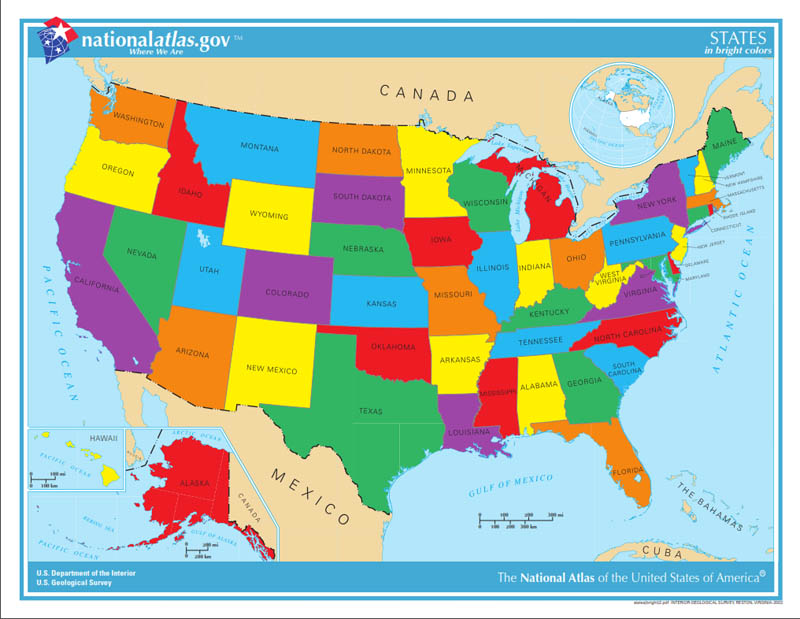
Trump’s efforts to overturn state laws are part of his effort to consolidate power and suppress opposition.
State authority isn’t unlimited, but current legal doctrines give it broad scope. So, apparently, does national politics, given that Congress recently rejected a proposal to preempt state AI laws and has never seriously considered preempting state climate laws.
As we all know, Congress has found it extraordinarily difficult to enact legislation on major issues. The executive branch, under the Supreme Court’s “major questions doctrine,” lacks the power to fill the gap. That leaves only the states to save us from paralysis when major new issues arise. That may not be ideal, but it’s better than nothing.
The Answers are Blowing in the Wind
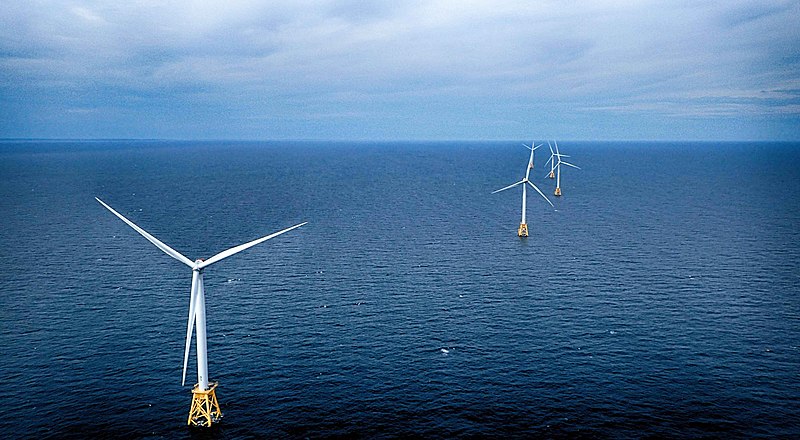
A district court overturns the moratorium on offshore wind, deciding two key legal issues along the way.
The Trump Administration advanced two far-reaching arguments in this case. One is that, when the President directs how an agency should exercise its statutory authority, normal limits on agency action don’t apply. The other is that, even if an agency action is illegal, it must remain in effect against everyone in the world except the plaintiffs who challenged it in a specific case. We can expect the government to keep pressing these points, up to and including Supreme Court review. But the district court in the offshore wind case, along with other lower courts, correctly rejected these arguments.
CONTINUE READINGTrump is Trying to Make Us Pay More for Gas

The Drain is a weekly roundup of environmental and climate news from Legal Planet.
At a White House photo op last week, surrounded by rich auto executives and congressional Republicans, Trump delivered his latest blow to Americans’ pocketbooks by announcing a policy change that could cost us consumers up to $185 billion when filling up our tanks at the pump. If you’re scratching your head trying to recall this …
Continue reading “Trump is Trying to Make Us Pay More for Gas”
CONTINUE READINGThoughts on COP30

What have we learned about the future of climate negotiations?
we can only expect incremental progress from the U.N. unless or until China takes a leadership role, particularly while the U.S. is also on the sideline. Incremental progress is better than no progress, obviously. But we’re going to have to look elsewhere for productive international action.
Basically, that’s going to have to rely on something less than the international consensus that drives COP. That means doubling down on some other options: bilateral climate agreements between countries, action by coalitions of interested countries, and subnational agreements including states, provinces, and cities around the world.
CONTINUE READINGScience and Democracy

The scientific process is crucial for a well-functioning democracy.
Beyond its utility, science also models some important features of democracy. It aspires to a marketplace of ideas in which everyone with the needed background knowledge can participate, and in which conclusions are based on debate and data rather than power. As a recent D.C. Circuit case illustrates, the law calls on government agencies to make decisions in the same, considering all the scientific evidence and arguments, then providing a reasoned explanation for its decision.
CONTINUE READINGIs Trump Running Out of Ideas?
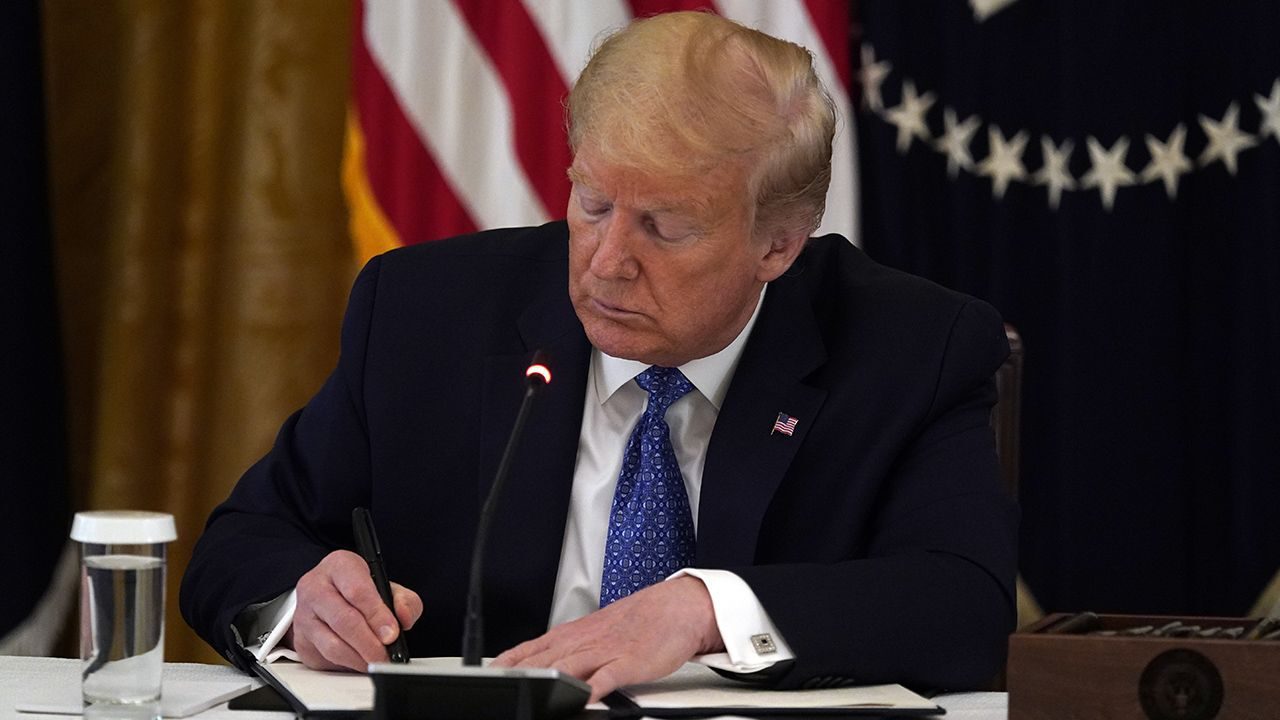
The hectic pace of the first few months seems to have turned into a slow walk, if not a crawl.
The intimidating scale of Trump’s initial actions has now slipped into the routine of ordinary government, allowing the opposition to recover from its initial paralysis.
One downside of “shock and awe” is that you risk a perception of declining momentum later on. It’s like starting the fireworks show with the grand finale; after you’ve shot off all your big rockets, the rest of the show seems dull, and the audience may just wander away.
Trump’s Baffling Free Pass for Coke Oven Pollution
Even for the Trump Administration, this seems really weird.
Trump just gave coke ovens a free pass for their toxic air pollution. What makes this so weird is not Trump’s reversal of a public policy protecting public health or of an action taken under Biden. Both of those are routine these days. Nor is it weird that Trump did so without the slightest factual basis. That’s also par for the course these days. What is weird is doing this after Trump’s own EPA director, who has no evident scruples about favoring industry, said no. There is no indication Trump was even aware of this fact. And it is even weirder, in that industry didn’t have a compliance problem in the first place and would save only pocket change from the postponement.
CONTINUE READINGEverything is Awesome!

Well, not really, but China’s astonishing progress in curbing emissions points to a technological way forward — and how the United States is being left behind.
There is so much that is awful, so let’s see some good news for once: China’s carbon dioxide (CO2) emissions were unchanged from a year earlier in the third quarter of 2025, extending a flat or falling trend that started in March 2024. The rapid adoption of electric vehicles (EVs) saw CO2 emissions from transport fuel drop by 5% …
Continue reading “Everything is Awesome!”
CONTINUE READINGYes, Secretary Noem, We Really Do Need FEMA

An advisory committee suggests upgrading FEMA, but Noem still hopes to gut it.
The Washington Post reported yesterday that a special advisory council has recommended that FEMA be strengthened and taken out of DHS. Secretary Noem is unconvinced and seems to be trying to bury the recommendations. She’s wrong. FEMA really is needed, and the reasons tell us a lot about what kinds of reforms make sense. First responders are usually state and local – they’re already nearby – and much of the work of reconstruction is also overseen locally. So why do we need FEMA? Let me count the ways.
CONTINUE READINGJoin Our Mailing List
Climate policy is changing rapidly. Stay in the loop with expert analysis via email Monday - Friday.

The Drain is a roundup of climate and environmental news from Legal Planet delivered to your Inbox once a week.