


























































Politics
Whither the Governor’s Mansion?

Some big environmental battles are brewing in Sacramento. But where will the next Governor stand?
Those of you who tuned in to the extra-long season finale of my favorite reality TV show, the California State Legislature, on September 1 (a full half-day after session was supposed to end, mind you: Drama!) may have, as I did, audibly gasped at the moment when the Assembly simply declined to vote on a …
Continue reading “Whither the Governor’s Mansion?”
CONTINUE READINGWhat Explains Trump’s Energy Policy?
There’s no plausible economic explanation. It’s all about politics.
Trump’s energy policy rests on promotion of U.S. fossil fuel production and use. The instruments include orders forcing coal-fired generators to keep operating, relaxed air pollution standards for power plants, and repeal of as many energy efficiency standards as possible. Trump’s overall economic policy centers on mercantilism, the belief that countries get rich by exporting more than they import. That fits pieces of his energy policy but not others. There’s also some rhetoric about free choice by consumers, but Trump clearly is not a believer in free markets as a matter of principle.
CONTINUE READINGFour Tight House Races in California

None of these is a true toss-up, but they’re still very much in contention.
I can only see four California congressional districts where Republicans seems to have any reasonable chance (apart from those where Republicans have been packed as part of the gerrymander). They all lean at least slightly Democratic, but the Democrats are far from having these races locked down. I’ll start with the race that seems most in question and move to others that are tougher challenges for Republicans.
CONTINUE READINGThe Attack on California’s Coast Puts Us in Uncharted Waters

The Drain is a roundup of environmental and climate news from Legal Planet.
California’s coast faces danger from which of these threats: a) Increasingly likely Super El Niño b) Super king tides c) Rising sea levels d) The Trump Administration e) All of the above If you answered “e,” congratulations. California is staring down a rare convergence of El Niño, climate-fueled sea level rise, and big waves that …
Continue reading “The Attack on California’s Coast Puts Us in Uncharted Waters”
CONTINUE READINGPaying More to Stay Cool, Super El Niño, Solar Politics

The Drain is a roundup of climate and environmental news from Legal Planet.
Every time I walk by my mailbox these days I dread receiving my electricity bill for this summer, because it’s been hellishly hot and I know our bill is going to be higher than usual. I try to tell myself the good news: After installing an energy-efficient heat pump this year, our home has been …
Continue reading “Paying More to Stay Cool, Super El Niño, Solar Politics”
CONTINUE READINGDon’t Mess With Solar

A new clean energy PAC has become a big player in GOP primaries. But what happens in November?
Congressmember Andy Ogles of Tennessee is a zit on the face of American politics: a white nationalist and Islamophobe who started out as a flunkie for the Koch Brothers and lied about his credentials when he first ran for Congress. Unsurprisingly, he is also a climate denier, (in)famously stating during a 2024 House debate on …
Continue reading “Don’t Mess With Solar”
CONTINUE READINGScience Wins A Skirmish

The Senate’s Continuing Resolution Blocks Russ Vought’s Odious Politicization of Science — Temporarily
Thank heaven for small favors: Senators on the Appropriations Committee on Sunday released a stopgap funding bill to avert a government shutdown by Oct. 1 and temporarily block a White House proposal that would fundamentally change how the federal government awards and manages grants. In late May, the Office of Management and Budget released …
Continue reading “Science Wins A Skirmish”
CONTINUE READINGElection 2026: Three Months to Go
Gerrymandering has given House Republicans a boost, and the Senate leans toward the GOP, but it still promises to be a real horse race.
Given partisan polarization on climate change and other environmental issues, the composition of Congress makes a big impact. We’re three months from election day. This post scopes out what things look like now. Obviously, things will change between now and the election. It’s worth reflecting, however, on how it would impact policy if current trends …
Continue reading “Election 2026: Three Months to Go”
CONTINUE READINGPondering the Effects of Biden’s Climate Policies
A new report has some unexpected implications.
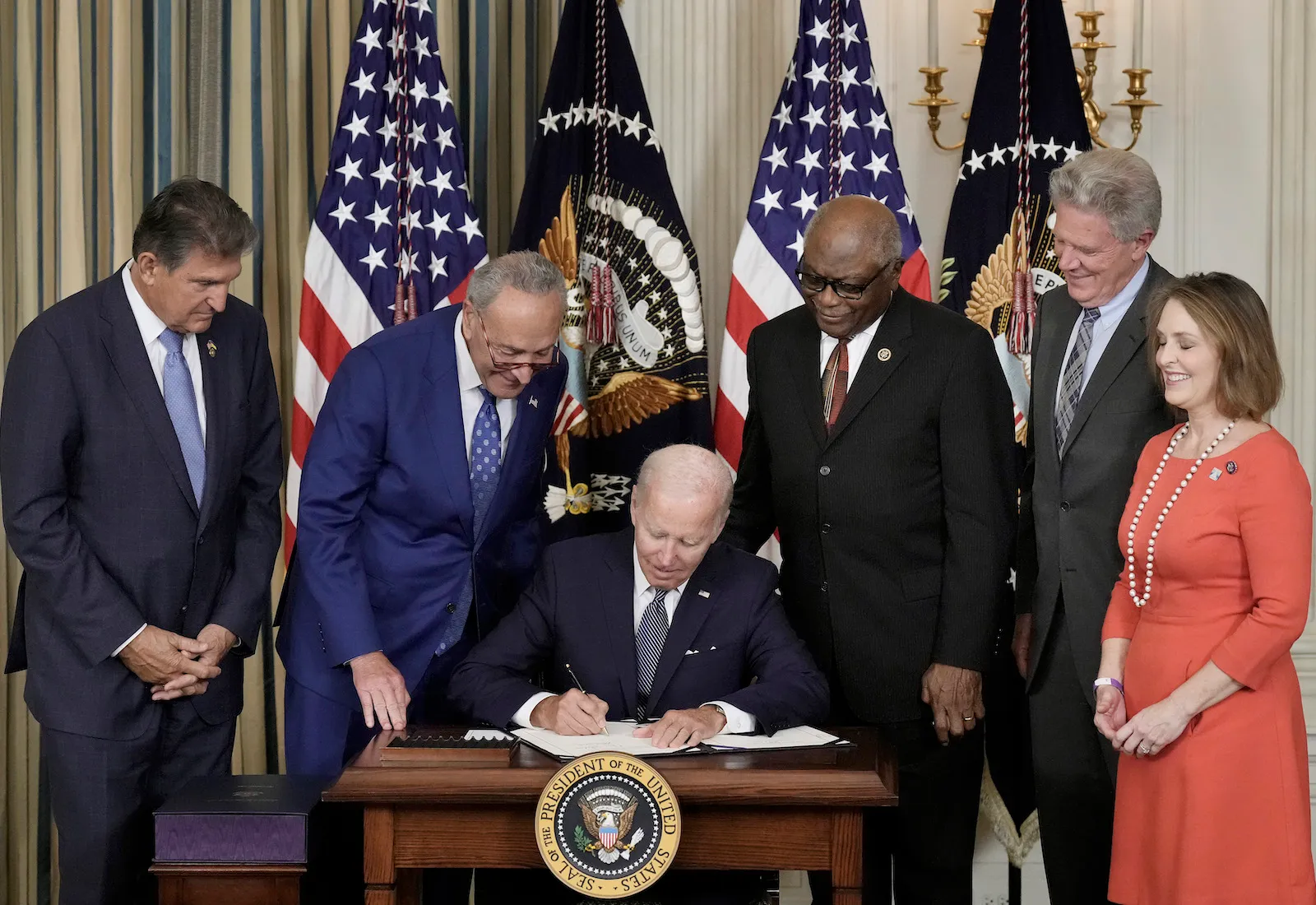
A new report from an MIT researcher says that the “glass is half full” in terms of prospects for renewables in the U.S. This was interpreted by some to mean that Biden’s climate policies were proving successful despite repeal of key parts of the Inflation Reduction Act. That’s a bit of a misreading. It also misses some key takeaways from the report. Those include skepticism about tax credits for wind and solar, an emphasis on removing obstacles to new projects, and a call for supporting the development of “firm” power sources like geotherma
CONTINUE READINGProject 2025 Was Awful. Trump Has Been Worse.

Trump disowned Project 2025. In retrospect, it seems like he considered it too moderate.
When the Heritage Foundation released Project 2025, there was a big hullabaloo, and Trump quickly disowned it. Bad as it was, however, it appears Project 2025 apparently failed to anticipate the full sweep of Trump’s second term. Many of Trump’s actions mirror Project 2025 recommendations, but in some key areas he’s gone much further. Here …
Continue reading “Project 2025 Was Awful. Trump Has Been Worse.”
CONTINUE READINGJoin Our Mailing List
Climate policy is changing rapidly. Stay in the loop with expert analysis via email Monday - Friday.

The Drain is a roundup of climate and environmental news from Legal Planet delivered to your Inbox once a week.