
























































Big Decisions to Come in 2026
The Drain is a weekly roundup of environmental and climate news from Legal Planet.
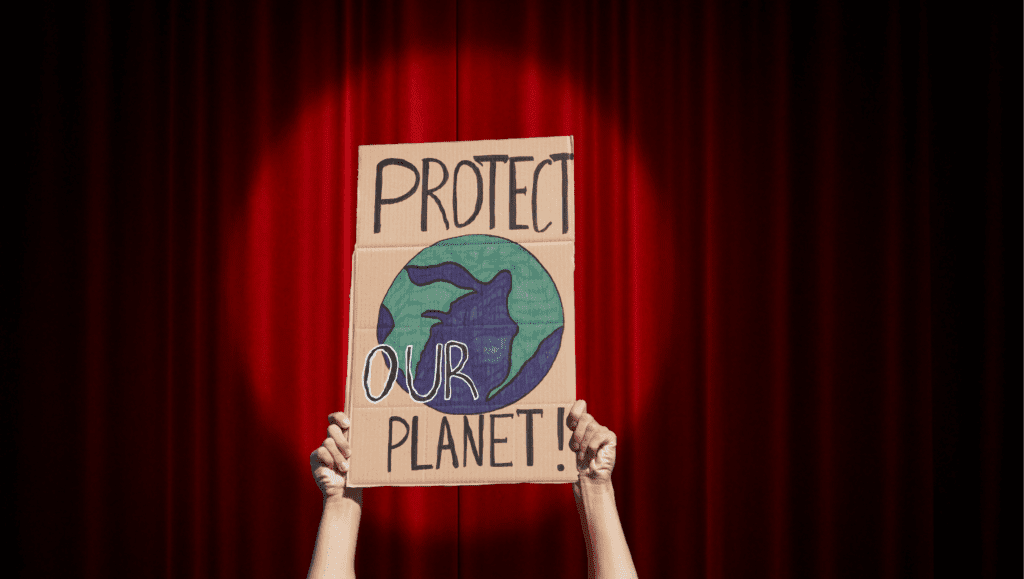
I spent much of 2024 warning about the nihilistic goals of Project 2025 and then spent 2025 watching a lot of it come true. Our collective project for 2026 is to settle on solid alternatives to MAGA and decide on candidates. Luckily, last year also brought a growing resistance movement, lots of litigation, and unpopularity for Trump’s “Toxics First” agenda. So, there is good reason to believe that this year may bring better news. If you want to know what environmental and climate stories will dominate the headlines, here are 10 big stories to watch.
Clean energy in the courts: Trump’s insane war on wind dominated 2025, but this year will be more about that industry, and others, fighting back. Wind Developers of five offshore wind farms that were ordered by the Trump administration to halt construction are suing to restart work on at least three of the projects. Revolution Wind off Rhode Island and Empire Wind off New York were the latest to sue the Trump administration. The attorneys general of Connecticut and Rhode Island joined the developer of Revolution Wind in asking courts to lift the Trump administration’s stop-work order on the nearly completed project. This week, a federal court shot down the administration’s stop work order on Orsted’s Revolution offshore wind farm, yet again allowing construction to resume. Another federal judge meanwhile ruled yesterday that the administration’s decision to slash $8 billion in energy grants to recipients in blue states was illegal.
Growing the grid: Canary Media staff compiled the 10 big energy stories they’re watching in 2026, including: the rise of virtual power plants, make-or-break year for the US nuclear renaissance, the financial benefits of electrifying new buildings, the geothermal breakthrough, and the AI boom’s battery awakening. Heatmap’s Robinson Meyer gave a speech to an energy policy conference hosted by the Niskanen Institute about how 2025 was “a year of energy confusion” for both parties and highlighting trends that will shape and constrain how energy policymakers go forward. He concludes with the idea that both parties have reason to grow the grid: “Republicans cannot achieve their economic objectives — nor Democrats their climate goals — without a grid buildout.”
Gavin’s last year: This is the last year of Gavin Newsom as governor of California so his approach to affordability politics and the race to be the next governor will be a big story line. There was a lot of media coverage of Newsom’s last ‘state of the state’ last week. While eying a presidential run, he wasn’t totally silent on climate. He mentioned climate change a few times and energy several times, including the (clunky) line that “the new cost of eggs is now your energy bill.”
Climate politics heading into the midterms: How candidates for other offices handle ‘the new cost of eggs’ will also dominate our attention. Can affordability politics be harmonized with environmentalism? Dawn Lippert, CEO and Founder of nonprofit investor Elemental Impact, recently opined at Heatmap News that “environmentalism must evolve from a movement that merely protects to a movement that also builds and innovates.” But can this kind of abundance be pursued sustainably? Will candidates for jobs like Newsom’s stay silent on climate? Sammy Roth writes that “A leading gubernatorial candidate (Tom Steyer) with a proud history of climate advocacy in one of America’s most climate-conscious states needs to be able to say the words “climate change” on the anniversary of the worst fire in the state’s largest city.” Would you? You can find out. Run for Climate has launched registration for their next ‘Run for Climate’ training in February & March 2026.
Stagnating EV growth in America: Tesla is no longer the largest automaker in the world, and its declining global sales are likely to be reflected in California figures released later this month. And yet some of the most anticipated new electric models we’ve seen in years are supposed to be coming to America in the year ahead, writes Andrew Moseman, including: budget EVs, Rivian’s R2, and the rise of the used EV.
Climate lawsuits vs. Big Oil move ahead: A Hawaiʻi state judge recently rejected oil companies’ attempts to have Honolulu’s climate deception case dropped, sending that landmark case forward toward discovery. The Center for Climate Integrity says we may know as early as this week whether the U.S. Supreme Court will grant Big Oil’s plea to review the Colorado Supreme Court’s decision in Boulder’s climate deception lawsuit.
The fate of Venezuelan oil: Trump announced that the U.S. would receive as many as 50 million barrels of sanctioned oil from Venezuela, worth about $2.5 billion, and that Venezuela would share in the profits from the sale. On Friday, Trump met with oil executives in the White House who had some praise for Venezuela intervention, but no firm commitments. “If we look at the legal and commercial constructs and frameworks in place today in Venezuela today, it’s uninvestable,” Exxon Mobil Corp. CEO Darren Woods told Trump, who responded Sunday that he may exclude Exxon from benefiting. If Venezuela tripled its output to near its 1970s peak of 3.7m barrels a day, the Guardian reports, it would seriously undermine the already faltering global effort to limit dangerous global heating.
Opinions changing toward geoengineering research: The US far-right has gone all in on opposing geoengineering research. Climate progress is stalling globally. I think we’ll see others around the world warm to the idea of this research. In an opinion piece for the Guardian, Craig Segall and Baroness Bryony Worthington argue that it’s a moral imperative to research geoengineering now, in time for any decisions to be just, effective, and transparent. “In effect, we have already geoengineered the climate – just without intention, governance or regard for consequences… A serious research program is how the world gains real choices.”
Climate-fueled disasters are coming for a less-prepared US: The total cost of the damage from natural disasters in the United States last year was $115 Billion, according to a new report from Climate Central, a nonprofit group. This comes as FEMA supervisors are advising their staff to prepare for the elimination of 1,000 jobs this month.
Can Congress do anything? Lawmakers are back on Capitol Hill and have to hammer out a deal to keep most federal agencies and programs funded beyond Jan. 30 while the prospects of permitting reform coming together this Congress have seriously dimmed.
Welcome to The Drain, a weekly roundup of climate and environmental news from Legal Planet. Our song of the week is “Box of Rain” by the Grateful Dead.
New Year, Same Trump Administration
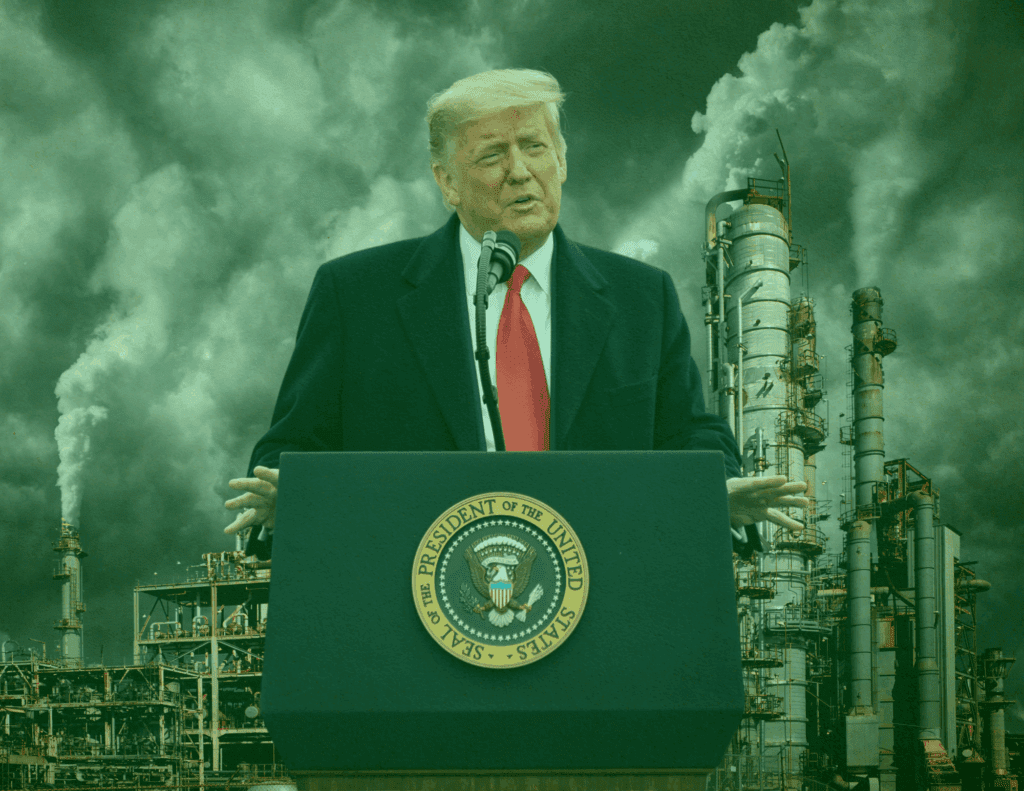
Trump’s EPA plans to stop tallying the lives saved when setting rules on air pollution. In a major reversal, the agency plans to calculate only the cost to industry and not the gains from the health benefits caused by curbing two of the most widespread deadly air pollutants, fine particulate matter and ozone, according to internal agency emails and documents reviewed by Maxine Joselow at The New York Times.
Justin S. Mankin, an associate professor at Dartmouth College, seems to have pioneered a new way of framing how Trump 2.0 is not just ignoring climate change but actively making it worse. “Trump’s greenhouse gas emissions will cause Trump’s heat waves, Trump’s droughts, Trump’s floods, and Trump’s wildfires,” he told Lisa Friedman in a NY Times story titled “Under Trump, US Adds Fuel to a Heating Planet.”
Last week, EPA sent its draft final rule repealing the endangerment finding to the White House for review. The rule (Reg. 2060-AW71) arrived at the Office of Information and Regulatory Affairs on Wednesday, according to the agency’s website.
In government records that have flown under the radar, the EPA is questioning its legal authority to revise pollution rules more than once when new science shows unacceptable health risks, Lisa Song reports at ProPublica.
EPA Administrator Lee Zeldin is working on a “Make America Healthy Again” strategy for his agency after getting majorly criticized by MAHA voices. Zeldin says the strategy will address initiatives on plastics, food waste, Superfund cleanups and lead pipe replacements.
MAHA now presides over the food pyramid. Some health writers have praised the basic outline of the dietary recommendations for prioritizing whole grains and vegetables. “But if a nation’s diet requires ecological destruction to sustain it, can it really be called healthy?” Emily Atkin asks at HEATED. “In extolling meat and dairy, Mr. Kennedy’s not just offering lifestyle advice, but signaling approval for some of the most climate-intensive industries on earth,” writes Matt Prescott.
BLM issued 5,742 drilling permits during the first year of Trump 2, that’s a 55% increase over the previous year, E&E reports.
Trump announced last Wednesday that the U.S. would withdraw from the United Nations Framework Convention on Climate Change, the UN climate treaty, and 66 international commitments in total. Can he do that? “The president can withdraw unilaterally,” from the Paris Agreement, says Sue Biniaz.
Energy
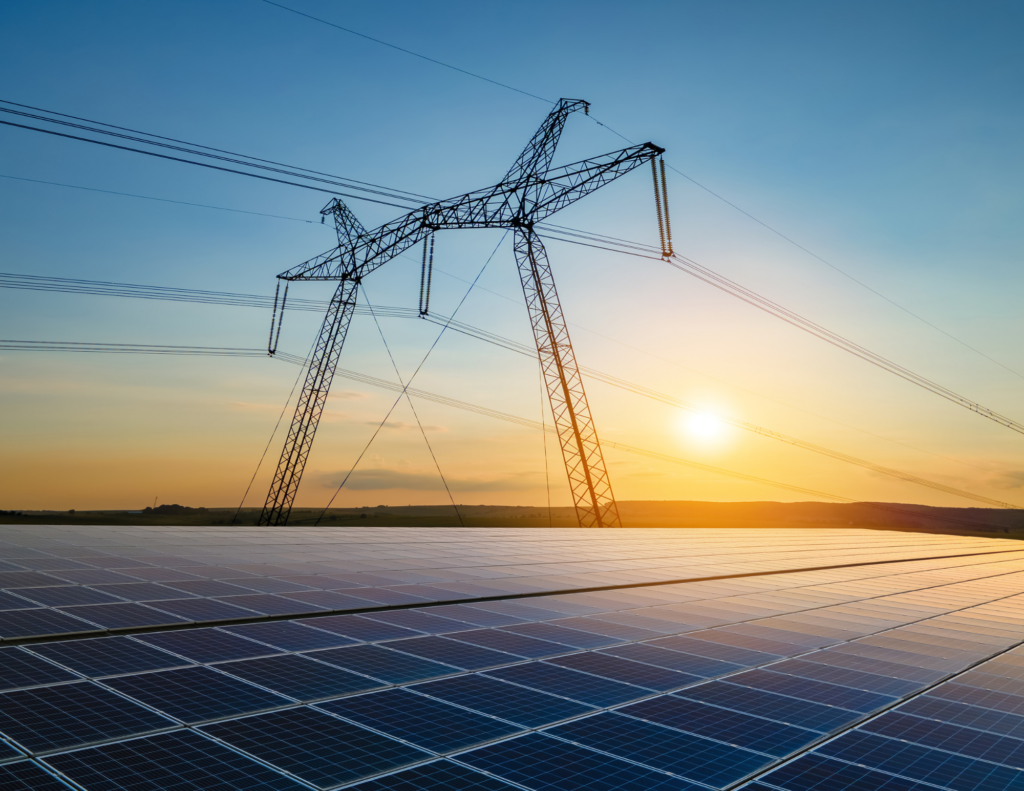
The Navajo Nation approved a lease for an Indigenous-owned developer to build a 750-MW solar-plus-storage installation and transmission line despite some local concerns, Arizona Republic reports.
Meta last Friday announced a deal to buy power from the nuclear utility Vistra and to help build reactors with TerraPower.
In Illinois, a moratorium on new nuclear reactors has been lifted. New power reactors of any size can now be sited in the state of Illinois, thanks to legislation signed by Gov. J. B. Pritzker on January 8.
On Dec. 19, New York Governor Kathy Hochul signed legislation to eliminate the “100-foot-rule” for new natural gas hookups saying that it costs New Yorkers hundreds of millions of dollars a year. That rule, on the books for nearly 140 years, subsidized free hookups to the gas system for new customers in the state.
A 13-state alliance at the National Association of State Energy Officials launched a new accelerator program that’s meant to “rapidly expand geothermal power development.” It includes Arizona, California, Colorado, Hawaii, Idaho, Louisiana, Montana, Nevada, New Mexico, Oregon, Pennsylvania, Utah, and West Virginia
California

California is officially free of all drought for the first time in 25 years. Currently, 14 of the state’s 17 major water reservoirs are at 70% capacity or higher and wildfire risk is minimal, LAT’s Clara Harter reports. More stats here at CalMatters drought tracker. California’s largest reservoir rose 36 feet as rains boost water supply statewide, Mercury News’ Paul Rogers reports
The U.S. Bureau of Reclamation just released a report with five options for managing water from the Colorado River after 2026. California faces significant water cuts under some proposals, which could impact cities and agriculture, the Desert Sun reports. Any of the alternatives would likely “lead to lengthy litigation,” Ian James reports for LAT.
The Trump administration sued two Bay Area cities over their restrictions on gas infrastructure and appliances in new construction. DOJ attorneys allege that ordinances passed by the cities of Morgan Hill and Petaluma since 2019 violated EPCA. “We see very high percentages of buildings going all-electric already,” Matt Vespa at Earthjustice told Canary Media. “Nothing about this lawsuit is going to change that.” Why not target Los Angeles? The LA City Council repealed its own All-Electric Building ordinance back in June 2025 with little fanfare.
State Sen. Scott Wiener, now running for Nancy Pelosi’s long-held House seat, introduced two new bills he says are designed to ease rising energy costs: one on heat pumps and one on rooftop solar.
A water district serving the western San Joaquin Valley has a long-term blueprint for developing solar, storage and transmission on lands that “can no longer sustain irrigated agriculture.” PV Magazine reports that the board of California’s Westlands Water District adopted a clean infrastructure plan that it projects could result in 21 GW of solar power at full buildout.
Assemblymember Dawn Addis led a coalition of policymakers and advocates who gathered at the state Capitol this week to urge state residents to tell BOEM to remove the California coast from its forthcoming national offshore oil and gas leasing program during the public comment period that ends Jan. 23, Noah Baustin reports. Addis introduced AB 1536, a placeholder bill on the subject.
Speaking of which, California Legislature Committees have until Jan. 23 to hear and report to the floor bills introduced in their house in 2025.
Media News

The LA Local, a new nonprofit newsroom, launched its website. “We talked to more than a 1000 people across Los Angeles, from Long Beach to Pacoima, Koreatown to Tujunga… We asked what you needed from local news, what was missing and what frustrated you about how LA’s communities are covered,” writes Kristen Muller.
“PBS News Weekend” signed off for good on Sunday after federal budget cuts forced the broadcaster to “rework” its staffing and programming.
Nina Lakhani, formerly of The Guardian, is writing as the new global climate justice reporter for Drilled Media.
Gabriela Sá Pessoa, who has covered a wide range of stories for AP since early 2024, is joining the Associated Press’ climate team as an Amazon correspondent.

About Evan

Evan George is Director of Communications for the UCLA Emmett Institute, a leading environmental law center. He also writes The Drain, a weekly roundup of environmental a…
READ more
Reader Comments