























































Trump Administration
Unpacking the Senate Permitting Reform Bill: ESA
Changes to the Endangered Species Act are limited in scope
This post continues my review of the provisions of the Senate Permitting Reform Bill, focusing on the Endangered Species Act provisions in Title III. My introduction to the coverage of the bill is here. My discussion of Title I, covering NEPA is here (for remedies) and here (everything else). My discussion of the Clean Water …
Continue reading “Unpacking the Senate Permitting Reform Bill: ESA”
CONTINUE READINGUnpacking the Senate Permitting Reform Bill: CWA
Clean Water Act provisions have largest impacts on Section 404 permitting, and some on Section 401 certification
This post continues my review of the provisions of the Senate Permitting Reform Bill, focusing on the Clean Water Act provisions in Title II. My introduction to the coverage of the bill is here. My discussion of Title I, covering NEPA is here (for remedies) and here (everything else). Water Quality Criteria: Section 1201 requires …
Continue reading “Unpacking the Senate Permitting Reform Bill: CWA”
CONTINUE READINGUnpacking the Senate Permitting Reform Bill: NEPA
NEPA provisions are substantial in their changes, but (mostly) leave the core of the Act in place
I’ve already written some about the Senate permtting reform bill, including the provisions on NEPA remedies. In the next few posts I’m going to take deep dives on Titles I through IV of the bill, which are the primary changes to environmental law. First, I’ll cover the changes to NEPA in Title I besides NEPA …
Continue reading “Unpacking the Senate Permitting Reform Bill: NEPA”
CONTINUE READINGOpening Shots in a War on Doctors

What began as a war on science has now reached your kid’s doctor.
The doctors we all rely on have now joined liberals and journalists as enemies of the people. RFK, Jr., is excited about eliminating “medical tyranny” by replacing doctors with AI. Texas AG Ken Paxton is investigating all the state’s pediatricians for misconduct. Medical associations are under fire. Fanning the flames of distrust for modern medicine has real consequences. We saw that Monday when the Governor of New York was forced to declare an emergency over the spread of measles, a disease once thought to be extinct in the United States.
CONTINUE READINGDeregulatory Theater of the Absurd

The new CAFE standards are a master class in pretending you’re implementing a law while totally sabotaging it.
The Department of Transportation (DOT) recently issued CAFE standards — fuel efficiency standards for new cars. Rolling back more rigorous standards from Biden, DOT applied considerable ingenuity to ensuring that fuel efficiency will stagnate for the foreseeable future. Like an Escher drawing, you have to step back from all the intricate details to appreciate just how weird the overall design is.
CONTINUE READINGGorsuch is (Partly) Right
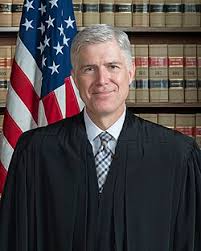
Justice Gorsuch is wrong about the cure, but delegation has gotten out of hand.
Justice Gorsuch has made it a personal crusade to revive the nondelegation doctrine, in part because of concerns about the rising tide of presidential power. The nondelegation doctrine tries to limit the ability of Congress to delegate authority to the executive branch. That’s an unworkable solution, but Gorsuch is right that Congress has put far too much trust in the good faith and sound judgment of the President and his subordinates. That’s especially true of national security and emergency powers.
CONTINUE READINGSome (Very) Modest Progress on EV Charging Policy
Three new bills address challenges, but bigger opportunities await
Last week, Governor Newsom signed a batch of legislation intended to promote installation of electric vehicle (EV) chargers around the state. California is home to over 200,000 publicly accessible EV chargers, which is both an outstanding infrastructure achievement and a far cry from the million chargers that the California Energy Commission estimates we will need …
Continue reading “Some (Very) Modest Progress on EV Charging Policy”
CONTINUE READING“National Security” is Becoming a Punch Line

Whenever he wants to roll back environmental protections, Trump cooks up a new national security justification.
A recent NY Times article recounts how often President Trump has invoked national security. It earnestly dissects his latest and most absurd claim: that the Arc deTrump he wanted to build will be filled with snipers, ammunition, and drones. It turns out that the snipers would be in an excellent position to shoot out the crosses in Arlington National Cemetery but not to protect anything of strategic importance. The environment has been one of Trump’s most fertile grounds for pretextual national security claims.
CONTINUE READINGWhat Explains Trump’s Energy Policy?
There’s no plausible economic explanation. It’s all about politics.
Trump’s energy policy rests on promotion of U.S. fossil fuel production and use. The instruments include orders forcing coal-fired generators to keep operating, relaxed air pollution standards for power plants, and repeal of as many energy efficiency standards as possible. Trump’s overall economic policy centers on mercantilism, the belief that countries get rich by exporting more than they import. That fits pieces of his energy policy but not others. There’s also some rhetoric about free choice by consumers, but Trump clearly is not a believer in free markets as a matter of principle.
CONTINUE READINGThe Polluter-Pays Principle and Its Enemies
An essay by Alejandro Camacho and Robert L. Glicksman on corporate fraud, weaponizing preemption, and the survival of climate accountability.
This post by Alejandro Camacho and Robert L. Glicksman is an excerpt from an article first published in the University of Chicago Law Review. On the morning of December 30, 2021, the Marshall Fire ignited in Boulder County, Colorado. Driven by hurricane-force winds and fueled by vegetation desiccated by years of drought, it burned more than six …
Continue reading “The Polluter-Pays Principle and Its Enemies”
CONTINUE READINGJoin Our Mailing List
Climate policy is changing rapidly. Stay in the loop with expert analysis via email Monday - Friday.

The Drain is a roundup of climate and environmental news from Legal Planet delivered to your Inbox once a week.