
























































Climate Issues in the 2026 Governor’s Race: Electricity Affordability
Second in a series of posts outlining key challenges and opportunities facing California’s next governor.
Skyrocketing electricity costs pose a formidable political and economic barrier as California pushes to decarbonize its power supply and electrify homes and transportation. The stakes for the incoming governor are incredibly high: average residential rates for large investor-owned utilities (IOUs) increased 8%-10% annually over the last decade, far outpacing the 3.5% inflation rate.
While the details of electric rate increases are complicated, the overarching cause is clear: climate change. It’s here, and it’s expensive. Wildfire costs now account for 14-19% of a residential customer’s bill, adding roughly $250-$500 on average to annual household costs. At the same time, the aging distribution and transmission systems (the “grid”) will require billions of dollars of new capital investment in the coming years.
There is some good news. Over the past decade, generation costs, the costs to actually create power, remained relatively flat in real terms thanks to the plummeting cost of renewable and other zero carbon energy sources. Demand for electricity also remained relatively flat as low cost energy efficiency measures, a mild climate (when it’s not on fire) and rooftop solar allowed Californians to achieve the second lowest per capita energy usage in the country. There are also promising signs that electrification of things like transportation could provide grid flexibility, reduce wildfire risks, and lower costs.
The next governor will need to tackle several key issues:
- Utility Structure and Public Investment: Debate will continue on the future role of privately owned utilities versus public ownership and financing of grid assets.
- Regulatory Streamlining: The California Public Utilities Commission (CPUC), the California Energy Commission (CEC) and the California Independent System Operator (CAISO) are a complicated bureaucracy that can lead to delays and frustration, yet they all play a vital role in planning and containing costs.
- Balancing Climate Adaptation with Affordability: The state must ultimately determine who will pay for the massive investments needed to manage wildfire risk, deal with climate catastrophes, and compensate victims.
Ultimately, ensuring that electricity remains safe, clean, and affordable will demand bold leadership from California’s next state executive.
You can read more about electricity affordability issues facing California’s next governor and access all of CLEE’s climate issue briefs at California Climate Vote. Read the first post on transportation here.
Reader Comments
2 Replies to “Climate Issues in the 2026 Governor’s Race: Electricity Affordability”
Leave a Reply

About Travis
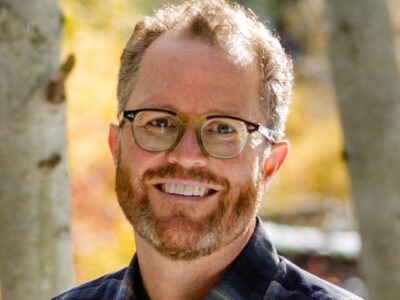
Travis Ritchie is a Climate and Energy Research Fellow at CLEE. He specializes in electric utility rates and regulation. His research focuses on electricity affordability…
READ more
Two problems with statements here. First, the CPUC’s SB695 report ignores the generation revenue requirement for the CCAs that supply 60% of PG&E’s customers. That means that the wildfire costs are a much smaller proportion of the service area rates. Second, we have not been able to duplicate the purported revenue requirements for PG&E–but we are able to do so for SCE and SDG&E. We believe that the CPUC may have confused PG&E WMP expenses for revenue requirements. There is no transparent report available to discern the how the CPUC arrived at its values. The bottom line is that wildfire costs are not as much of the revenue requirements as the CPUC appears to claim.
On the subject of heat pumps – can anyone here tell me why I need a city inspection, in addition to the state one?
Someone has already looked at it and checked it was installed correctly. So what is up with the other inspection – one for “safety?” For one thing, I will need to put smoke detectors in every bedroom – um, why???? (Which isn’t to say that it may not be a good idea…)
Am I right to be cynical? Or is it a kneejerk reaction? I am not feeling this, as the kids say.