





























































Canada in Flames
What’s causing the fires? What harm do they do? What should we do?
Summary
Climate change has produced a longer fire season in Canada, with warmer, drier, and windier conditions -- perfect for wildfires. We need to stop making climate change worse. We also need to help Canada manage its vast forests better. This problem isn't going to go away, but there are some positive steps we can take.
One of the world’s great disasters is unfolding, as fires have covered millions of acres in Canada, destroying pristine ecosystems and poisoning the air for millions of people. Something like seven million acres have already burned. The U.S. government’s response is to threaten Canada with tariffs, apparently as punishment for allegedly having poorly managed its forests. Instead, we should be partnering with Canada on forest management, and we should cut the greenhouse gas emissions that are ramping up the fire risk.
One thing that’s important to keep in mind is the sheer scale of the Canadian forests in a sparsely populated country. Arboreal forests circle the world from Canada through Siberia and Scandinavia. Canada’s arboreal forest is vast, covering about 1.2 million square miles. For comparison purposes, that’s about five times the area of Texas and about four times the area of all U.S. national forests combined. The Canadian population of 41 million (less than an eighth of the U.S.) hugs the U.S. border, meaning that much of the forest land is far distant from developed areas with roads. California has about the same population as Canada, but less than 5% of Canada’s forests.
The Causes
What is causing the Canadian wildfires? President Trump and other conservatives say they have the answer: poor forest management by Canada. This argument overlooks two crucial points, even apart from the lack of evidence to support the indictment of Canada’s forestry.
The first is the location of the fires. Half the fires in Canada are in remote, roadless areas. They’re impossible to put out, because firefighters simply can’t get there. According to the Wall Street Journal:
“Many of the largest fires, including those sending smoke into the U.S., are in the remote, northernmost reaches of Ontario, where there are no highways, roads or people. Even if air resources are deployed, some fires have become so large and intense that water bombers are unlikely to put them out. Deploying crews is dangerous.”
By the same token, those forests are impossible to manage. Unlike fires in the U.S. and in other parts of Canada, fires in these remote areas can’t be blamed on prior policies that tried to prevent all fires and, in the process, allowed the accumulation of vast amounts of fuel. We might be able to incrementally reduce fire risks in some of the nearer forests through better forest management, but as I discuss below, Canada may need additional resources to do so.
The point that Trump and company are overlooking is the change in fire conditions due to climate change. Wildfires are an increasing problem. As the Wall Street Journal reports, “Climate change is making some parts of Canada more hospitable to insects that weaken trees, making them more susceptible to fire.” (Unlike the newspaper’s editorial page, its news coverage does not deny scientific reality.)
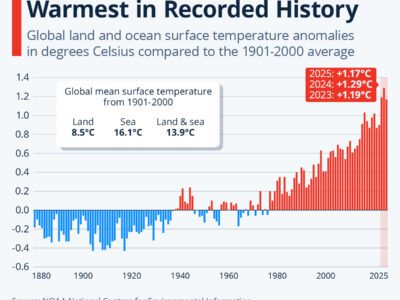
The role of climate change extends beyond insect infestation, however. Canadian summers are becoming warmer and drier, with more dry windy days that spread fires. Canada’s fire season in 2023, for instance, was the warmest and driest in at least forty years. Fire season is starting earlier and lasting longer. Lightning is becoming more frequent. In short, climate change has set the stage for more frequent, larger, and more destructive fires.
The Impacts
The fires will themselves accelerate climate change. Canada’s forest holds about a tenth of all the world’s land-based carbon storage, mostly in soils and peatlands rather the trees. Releasing any significant share of this carbon accelerates climate change. In 2023 and 2024, carbon releases from Canadian wildfires were comparable to national emissions of all but a few countries.
More than a hundred million people in the U.S. have been exposed to unhealthy air due to the fires. One study linked particulates released in the 2023 wildfires to seventy thousand deaths. The current wildfires have led to warnings of dangerous air pollution for millions of people, with some readings about twice the hazardous level. According to Trump’s own EPA, which generally tends to underplay pollution issues,
“The health effects of short-term PM2.5 exposure, and subsequently smoke, can range from relatively minor (e.g., eye and respiratory tract irritation) to more serious health effects (e.g., exacerbation of asthma and heart failure and premature death). In addition, there is initial evidence that short-term smoke exposure may lead to preterm birth and impact brain function (i.e., cognitive performance as measured through a brain-training game). Fine particles are respiratory irritants, and exposures to high concentrations can lead to persistent coughing, phlegm, wheezing and difficulty breathing. Exposure to PM2.5 may affect the body’s ability to remove inhaled foreign materials, such as viruses and bacteria, from the lungs.”
This is not to mention the effects of other air pollutants released by fires. Given that millions of people are exposed to the smoke, even statistically rare health effects will show up in hundreds of people.
Responses
What’s to be done? Yelling at Canada or punishing it for the fires is like screaming at your neighbor whose house is on fire. Besides being unwarranted, it’s simply not going to accomplish anything. Some of the problem is simply not solvable: the climate change we’ve already experienced is going to continue to lead to bad fire seasons. But there are some things we can do.
First, we can stop making the problem worse. Further climate change will only reinforce the trend toward hotter and drier summers in Canada, with bigger burns as the inevitable result. We need to get much more serious about fighting climate change. The Trump Administration, of course, is embracing fossil fuels with open arms, which is guaranteed to create even bigger risks.
Second, we can help Canada take practical measures to reduce fire risks. Although much of the risk comes from remote forests where management is impossible, that’s not true of all the fires. Better forest management has its limits, but it could help reduce risks in the areas where it’s feasible. But Canada has vast forests and limited resources. The U.S. will have to help if we want forest management dramatically increased. For that matter, we could also help finance wildfire control and contribute our own firefighting resources. This isn’t going to eliminate serious fires and smoke, but tamping down the level is a worthwhile goal.
The depressing reality is that this year’s fires aren’t a one-off. This is going to remain a serious problem impacting millions of Americans, regardless of what we do. But there are some constructive responses available. If we don’t start taking sensible steps, we’ll be dooming ourselves to increasingly worse problems.
Reader Comments
3 Replies to “Canada in Flames”
Leave a Reply


About Dan

Dan Farber has written and taught on environmental and constitutional law as well as about contracts, jurisprudence and legislation. Currently at Berkeley Law, he has al…
READ more
IMHO, the NEPA process is at the heart of the federal government’s taking sensible steps–look before you leap and analyze a reasonable range of alternatives to a proposed action. NEPA has changed a lot in the last few years, but it is still a useful statute.
Outstanding piece, Dan. This deserves to be shared widely. Maybe the WSJ editorial board might even open its mind to scientific realities again
Thanks, Eric. High praise!