


























































Administrative Law
Taking Care That the Law Be Fitfully Executed

Carrying out the law is the core duty of the President. And it’s being openly violated.
The parameters of presidential power have been debated since soon after George Washington took office. But the Constitution makes at last one thing crystal clear: the President must “take care that the laws be faithfully executed.” This is a task to which the current incumbent, it can be safely said\, has not applied himself.
The “take care” clause is reinforced by the very terminology used to describe the President’s authority, the clause vesting the “executive power” in the President. That’s a clause much beloved of believers in the unitary executive. The word “executive” traces back to exsequii, meaning to carry out or follow (ex meaning “out”, sequii meaning “follow”). Faithful obedience to Congress hasn’t exactly been a hallmark of the current Administration. Whatever it is that Trump is faithfully executing, it’s not the laws of the United States. Unless, a bit darkly, you were to take “execute” in the modern sense of killing off, not in the constitutional sense of carrying out.
CONTINUE READINGNew Trump Nuclear Reactor Policy: “Trust Us”
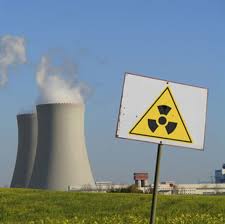
The Administration is eliminating safeguards and courting greater skepticism about nuclear safety
The Trump Administration is quietly dismantling safeguards for nuclear power. I’m neutral. But not if it’s being built with a “safety last” policy. Trump’s Department of Energy wants us to trust them to protect the public. But blind trust for federal agencies is in scarce supply these days. Trying to sneak through regulatory changes may speed things up in the short run but is likely to cause delays later. We know that the changes will be made by political appointees, with experts relegated to minor roles. This will build a legacy of distrust.
CONTINUE READINGThe Decline and Fall of the “Regulatory Czar”

Now, the office doesn’t even have a home page, and its boss is lawyer who faces possible disbarment.
OIRA, the White House Office of Information and Regulatory Affairs, was known as “the most powerful agency you’ve never heard of. That was only three years ago. Under Trump, however, OIRA seems to have become a minor subdivision of the Office of Management and Budget run by Russell Vought. The main purpose of the office was to oversee the use of cost-benefit analysis by regulatory agencies. The Trump Administration has all but abandoned this analytical tool by refusing to quantify regulatory benefits, so it’s now cost-benefit analysis. As a result, OIRA seems to be adrift. One sign of this declining importance is that it’s hard to even find the name of the person running the office.
CONTINUE READINGWhat Critics of the Unitary Executive Missed

This conservative theory has damaged democracy in unexpected ways.
You would think that some of the conservatives on the Supreme Court would start to see that their ideas about how to run the government are flawed. Sadly, there’s no evidence that they’ve seen the light. It’s true that they seem to be willing to make an ad hoc exception for the Federal Reserve, showing the truth of the saying that everyone’s scared of the bond market. But other than that, they seem happy to allow a single person’s whims to control the government. We’re going to need to figure out some new approaches if we want to have a government that implements in the law in a rational, even-handed way.
CONTINUE READINGNightmare on Penn Ave (Part 2)
After a year of Trump 2.0, here’s how things stand.
Eight years ago almost to the day, I wrote a post titled, “One Year and Counting.” I was writing at the end of Trump’s first year in office. And here we are again, one year into a second Trump Administration. Trump’s basically deregulatory strategy has remained largely unchanged. But there are some notable differences in the situations then and now. I closed my 2017 post with this: “One characteristic of the Trump Administration is a ceaseless stream of controversies and dramas. But generally speaking, the amount of actual legal change has been much more limited, because the system is designed to provide checks on administrative and legislative action.” It remains to be seen how well those checks will function this time around.
CONTINUE READINGMAHA’s Evidence-Free Health Policy
No matter how good your intentions, ignoring the evidence is a recipe for disaster.
It seems plain that key health agencies are now in the hands of earnest, well-meaning people who, unfortunately, don’t know what they’re talking about. For example, the CDC’s advisory committee on vaccines is largely composed of anti-vaxxers. When the committee recently decided to eliminate a recommendation for Hepatitis B vaccines, none of the speakers who addressed the committee, and no one on the task force assigned to investigate the question, was an expert on the disease.
CONTINUE READINGIs This the End of Cost-Benefit Analysis?
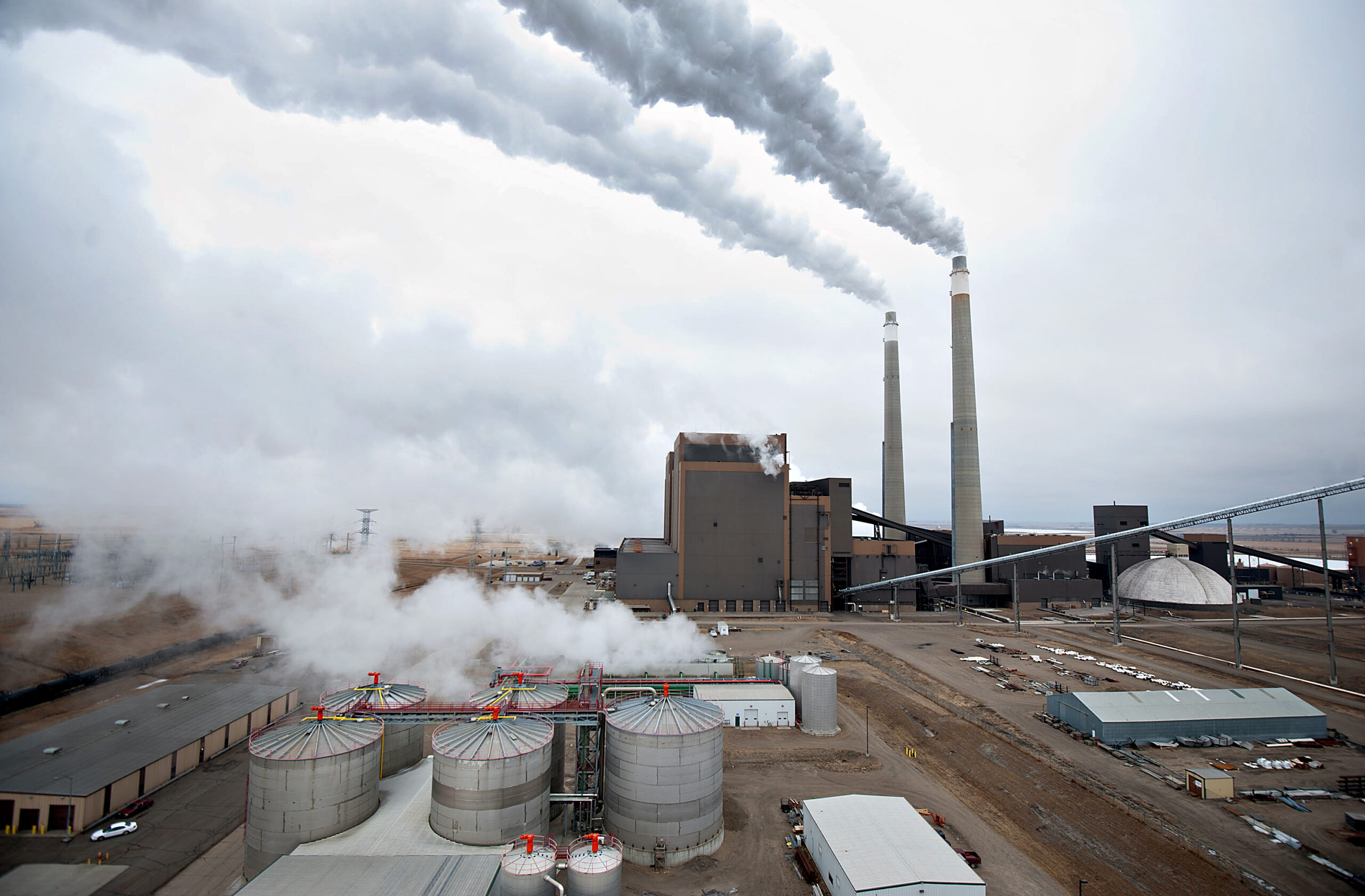
Trump’s EPA is effectively abandoning economic analysis
Maybe the Administration means to keep cost-benefit analysis in place for some other kinds of regulations at EPA or elsewhere. But if the courts uphold the EPA’s refusal to quantify the enormous harms caused by air pollution, it’s hard to see an argument for quantifying many other regulatory benefits. In other settings, environmentalists might applaud the repeal of cost-benefit analysis. In the current setting, however, the purpose is all too plain: to make it easier for the Administration to ignore the ways it is endangering human life and health.
CONTINUE READING2026: The Year Ahead

Here are six big things to watch.
What to watch for environmentally in 2026: court tests of Trump’s power, midterms, China, grid issues, and state energy moves. In 2025, Trump rolled out new initiatives at a dizzying rate. That story, in one form or another, dominated the news. This year, much of the news will again be about Trump, but he will have less control of the narrative. Legal and political responses to Trump will play a greater role, as will economic developments. Trump’s anti-environmental crusade could run into strong headwinds.
CONTINUE READINGNEPA and Democracy
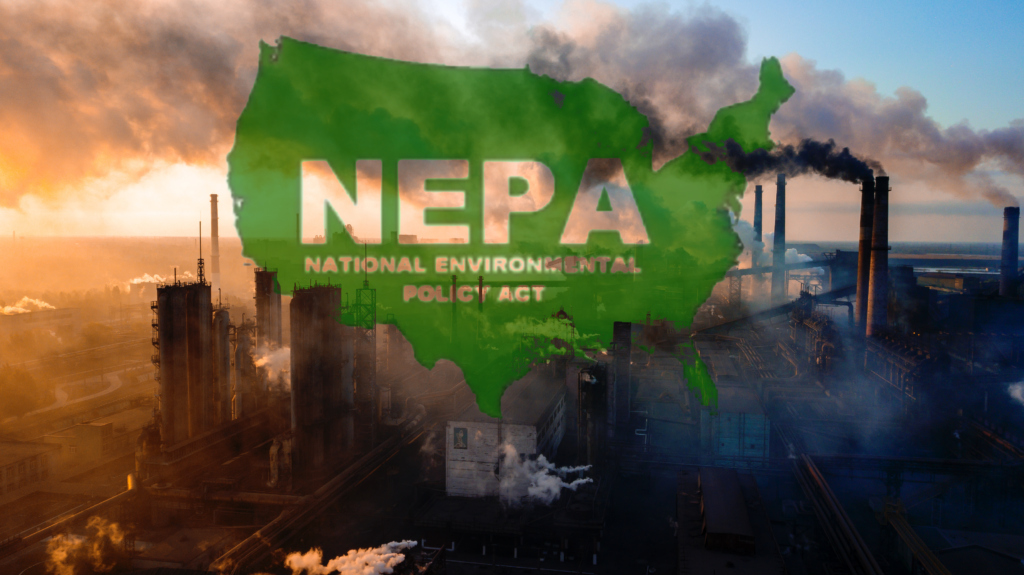
The Trump Administration is at war with transparency and public input.
The Administration is out to limit public oversight of government actions that, taken alone or as a group, will have major environmental impacts – notably, oil production, coal mining, nuclear reactors, and pipelines. Congress will also have less visibility into these important decisions. People are often impatient about procedures that slow decision making, sometimes properly so. But the solution is not a secretive decision-making process. If it’s true that democracy dies in darkness, it’s also true that ugly things rawl out of the woodwork when the lights are off.
CONTINUE READINGGames Deregulators Play

Here are the five moves the Trump EPA consistently uses to justify deregulation.
If you start reading the Trump Administration’s arguments for deregulation, a repetitive feeling soon sets in. Every deregulation is different, of course, but there are stock arguments that seem to surface again and again.These arguments have a distortion effect, blurring the benefits of regulations while magnifying their costs.
CONTINUE READINGJoin Our Mailing List
Climate policy is changing rapidly. Stay in the loop with expert analysis via email Monday - Friday.

The Drain is a roundup of climate and environmental news from Legal Planet delivered to your Inbox once a week.