



























































Has Trump Actually “Driven a Dagger Through the Heart” of Climate Policy?
Don’t jump to conclusions based on the Administration’s spin operation.
In announcing the repeal of the EPA Endangerment Finding, EPA head Lee Zeldin said, “we are driving a dagger straight into the heart of the climate change religion.” It’s odd to see the word “religion” used as a pejorative by an Administration that spends so much time demanding religious freedom. But of course, Zeldin knows perfectly well that the endangerment finding was based on science, not religion . Putting aside the phrasing, is he right in substance? Has the Administration killed off federal climate policy?
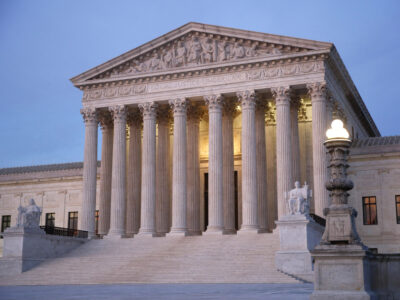
The answer is maybe, but probably not. To begin with, there’s a good chance that the repeal of the Endangerment Finding will be reversed by the courts. This could ultimately turn on the votes of two Justices (Roberts and Barrett). If Trump loses this one in court, that would ground federal climate policy even more firmly in the law, so the Administration is taking a gamble. Saying they’ve won is as premature as a roulette player who’s just put all their chips on one number announcing that they’re now rich before the wheel has even started turning.
Even if the courts do uphold the repeal, a lot will depend on just what legal theory the judges adopt. The Trump EPA has endorsed a grab bag of legal theories. If the Court adopted some of these legal theories, that would slam the door on efforts by future Democratic presidents. If the Court adopted other legal theories, that would leave room for some kinds of future regulation. I’ll go through EPA’s major justifications for the repeal and explain what each of them would portend if they formed the basis for a ruling that upheld the Endangerment repeal. Note, by the way, that since EPA chose not to contest climate science and rely entirely on legal arguments, their victory would in no way impugn the truth of modern climate science.
Trump Theory 1: Redefining Air Pollution. The relevant statutory provision—Section 202(a) of the Clean Air Act—empowers EPA to regulate the “emission of any air pollutant” from vehicles under certain circumstances. EPA now contends that the term “air pollutant” includes only those substances that cause harm by direct exposure to the substance in the air. That could exclude greenhouse gases.
Trump Theory 2: Technical Flaws. EPA issued the 2009 GHG endangerment finding and then separately issued a regulation of vehicle emissions. EPA also at that time lumped together six greenhouse gases, even though some aren’t emitted by cars. A future President could easily fix this simply by combining a new endangerment finding for the specific gases emitted by cars with new vehicle regulations.
Trump Theory 3: The Major Question Doctrine. The Trump EPA argues that regulation of greenhouse gases necessarily involves a major question, which requires extra-clear statutory authority. Such a ruling would have a drastic effect, eliminating regulation of vehicles and stationary sources under the Clean Air Act, as well as climate regulations under other statutes.
Trump Theory 4: Insignificant or De Minimis Harm. EPA currently claims U.S. vehicle emissions are too insignificant to matter, causing only 1 percent of warming by its reckoning. This argument involves a choice of what metric to use in assessing significance. Even if a court upheld EPA’s choice of this metric, it might leave the door open for a future EPA to choose a different metric such as the social cost of carbon, which would favor regulation.
Trump Theory 5: EPA’s Fallback Argument. Finally, Trump’s EPA argues that, even if the endangerment finding were valid, it still could not legally regulate vehicle greenhouse gases. EPA now says that “under any legal standard, it is unreasonable for the EPA to impose trillions of dollars in costs on manufacturers and American consumers in exchange for results that do not materially further congressional objectives—at least absent an extraordinarily clear indication in the statutory text.” This is a very fact-based assertion, since it depends on how EPA accounts for regulatory costs as well as its choice of a metric of significance for costs. The balance could easily shift, if (for instance) technological improvement made electric vehicles dramatically cheaper.
Of these arguments, the ones that would most impact future presidential authority would be those redefining the term “air pollution” to exclude greenhouse gases or holding all climate regulations suspect under the major questions doctrine. The other arguments seem to involve discretionary and changeable agency choices about how to measure costs and benefits. Those would do the least to constrain a future President. I haven’t given up hope, however, that all five theories will go down in flames.
About Dan

Dan Farber has written and taught on environmental and constitutional law as well as about contracts, jurisprudence and legislation. Currently at Berkeley Law, he has al…
READ more
Reader Comments