



























































Climate Journalism is “Breaking but Not Broken”
The Drain is a weekly roundup of environmental and climate news from Legal Planet.

The 2026 Pulitzer Prize announcements happened this week and environmental reporting was in the mix though not central enough if you ask me.
Here’s where it shined: The Breaking News Reporting category was dominated by journalism covering climate-fueled extreme weather. Finalists included staff of the Seattle Times for more than 100 stories covering catastrophic flooding in the Pacific Northwest — work that warned residents in real time and “explained how weather and geography combined to cause the devastation.” A series of atmospheric rivers crushed Western Washington in December and Seattle Times journalists waded through the muck, huddled in shelters, and observed emergency rescues.
Also recognized was staff of the Southern California News Group (Los Angeles Daily News etc.) for coverage of the Eaton and Palisades fires and their “immediate aftermath and accountability-driven analysis.” Staff of the Wall Street Journal were finalists for “comprehensive and compelling reporting” on the deadly Texas flooding at Camp Mystic and the failures and technical errors that led to that tragedy. Missing from the category was staff of the Los Angeles Times for its coverage of the 2025 fires, which was extensive but, as I noted last year, often missed the connection to climate change. Ultimately, the Minnesota Star Tribune won the category for coverage of a mass shooting.
This Pulitzer Prize showing underscored to me that newsrooms in 2026 are fully invested in covering the breaking news aspect of climate-fueled disasters that are ripping through American communities. But they’re not investing the same award-winning energy or resources into exposing climate change’s less dramatic complications, root causes or solutions.
Don’t just take my word for it. Covering Climate Now recently released a white paper on the state of climate journalism, titled “A Burning House, a Quiet Media, a Silenced Majority,” which came out during the annual meeting of the Society of Environmental Journalists. “There has definitely been a decline in coverage globally and especially in the United States,” CCNow executive director Mark Hertsgaard said during a webinar launching the report. Climate coverage was down 14 percent globally and by 35 percent across the three broadcast networks here in the U.S.
This decline matters because journalists “play a decisive role in the climate challenge… shaping and framing what people think and feel, say and do,” Hertsgaard said. He talked to more than 30 reporters, editors, and news executives to find out why there is backsliding and how to remedy it. Partly it’s because of the “relentless firehose of news on other topics and the fact that the American president is a climate denier which leads to downplaying of the crisis. Notably, this is not happening in the Global South. “There is little backsliding there,” he said. “They understand the climate story is right on their doorstep.”
In the U.S., there’s also a downsizing in newsrooms: More than 50% of members of the Society of Environmental Journalists are now part-time or freelance journalists.
All of this helps explain why enterprise reporting on climate was not more prevalent at this week’s Pulitzer Prize awards, other than disaster coverage. Winners for Explanatory Journalism were Susie Neilson, Megan Fan Munce and Sara DiNatale of the San Francisco Chronicle for their series “Burned,” which showed how insurance companies used algorithmic tools to delay and deny payouts to LA fire victims. And Texas Monthly editor Aaron Parsley was awarded the prize for Feature Writing for “Where the River Took Us,” a first-person account of his family’s fight for survival during the Texas floods.
Truth is the Pulitzer Prize is not a great barometer for the current state of climate journalism. There is lots of great climate journalism happening at nonprofit newsrooms, scrappy startups, and smaller, niche outlets right now that may not rise to the level of exhaustive, investigative standards of the Pulitzer Prize in general categories. They may also not have time, energy or the interest to enter the competition. Maybe that’s why only weeklong coverage of historic catastrophes told by entire newsrooms made the cut. In 2026, climate disasters are what is “breaking.” Sadly, that will almost certainly be the case in 2027 too. Climate journalism as a field has taken some beatings itself but is not broken. Next year, I hope to see more of these storytellers recognized in the Beat Reporting and National Reporting category, because climate is much more than just breaking news.
Welcome to The Drain, a weekly roundup of environmental and climate news. Our song of the week is “all the good girls go to hell” by Billie Eilish, one of the 116 tracks on my ever-growing Climate Playlist.
More Media News

A recent report from the nonprofit environmental group Reverb, which partners with musicians to implement sustainability initiatives, is touting Billie Eilish’s most recent tour as a milestone in climate-friendly concertgoing. The tour raised $13 million for climate causes, kept 103,620 water bottles out of landfills, and led food drives that fed more than 4,000 people, according to the report.
Eilish sat for an interview with Carrie Battan of National Geographic about green concert tours and climate anxiety. “Things don’t have to be done the same way they’ve always been done,” she says.
A new study from the Media Insights Project finds that the type of news people use varies wildly by age but that everyone is stressed about all news except local news. The report also found that TV and radio still play an important role in American news consumption, and most Americans — 7 in 10 — access a paid media service of some kind, even if they borrow someone’s password.
Media Matters won a big victory in its case against the Federal Trade Commission. At issue was whether the Trump administration’s Federal Trade Commission could use the federal government to investigate and silence nonprofit watchdogs. Media Matters won legal decisions in the District of Columbia District Court and the D.C. Circuit.
FIFA talks about sustainability, but its sponsorship agreements tell a different story, Hayley Smith reports for the LA Times. Saudi Aramco, world’s largest oil & gas company, is a top sponsor of the 2026 World Cup, which will be held this year in Los Angeles and elsewhere.
Meanwhile, Amsterdam just became the world’s first capital city to ban ads for fossil fuel products (as well as meat!) to crack down on greenwashing or at least discourage consumption of goods linked with high-carbon emissions.
RFK Jr. has launched a weird, problematic new podcast called the Secretary Kennedy Podcast. Discussed: meat and boxing.
Unrelatedly, in less than one week, 10,871 new podcast feeds have been created; approximately 4,243, or 39%, might have been AI-generated, Bloomberg reports.
Fossil Fuel Phaseout
The Santa Marta conference on fossil fuel phaseout last week “may be a game-changing moment in the climate story, and journalists have an abundance of storylines to explore in the months ahead,” Covering Climate Now writes.
Officials from 57 countries gathered in that Colombian coal-port city. A new panel of scientists specialised in the energy transition will help governments develop roadmaps and align them with NDC climate plans, Climate Home News reports.
Some saw reflections of the 1997 Anti-Personnel Mine Ban Treaty, which was negotiated by 44 countries outside the traditional U.N. process. Others, like my UCLA colleague Ted Parson pointed to the 1987 Montreal Protocol that phased out ozone-depleting chemicals as a good precedent to follow.
Drilled’s Nina Lakhani was on the ground in Santa Marta and describes where there were big wins and big gaps.
One other concrete result, notes Justin Gerdes at Quitting Carbon, was a roadmap published by France for transitioning away from fossil fuels. The plan “sets end-of-consumption targets for coal by 2030, oil by 2045 and fossil gas by 2050 for energy purposes.”
The U.S. was not invited, given the Trump administration’s refusal to engage with international climate talks, as NYT’s David Gelles notes, and several other big countries did not attend.
The gathering got an unexpected boost when Fatih Birol, the head of the International Energy Agency, said in an interview with The Guardian that the war on Iran has broken fossil fuel markets beyond repair.
However, coal is also taking on a renewed appeal in the new world order, Zoya Teirstein and Jake Bittle report at Grist.
Methane
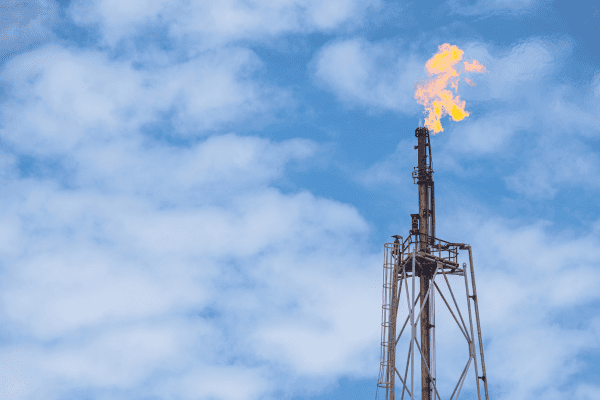
More than double the volume of gas that’s stuck in the Strait of Hormuz is needlessly wasted each year. Read that again. That’s because methane emissions from fossil fuels stayed near record highs in 2025, with no sign of decline, the International Energy Agency said on Monday. That’s despite proven, low-cost ways to reduce them and more attention than ever on leaks.
The IEA says about 20 percent, or 110 billion cubic meters of LNG globally, passed through the strait last year. It also calculated that 100 billion cubic meters could be made available annually by fixing leaks and otherwise preventing methane gas from escaping from operations. Another 100 “bcm” could be unlocked by eliminating non-emergency flaring, Attracta Mooney reports for the Financial Times.
The European Commission in Brussels is considering temporarily suspending methane penalties as energy firms warn of supply risks, E&E reports.
My Emmett Institute colleague Cara Horowitz blogged about our recent STOP Methane Project reports.
Trump Administration
While others eye renewables, Trump’s Department of Energy launched the so-called ‘Trump Peace Pipelines Framework’, at a conference in Croatia. It’s a memorandum of understanding to promote gas pipelines across Central and Eastern Europe, which would expand the region’s capacity to import U.S. LNG, Nicholas Cunningham writes at Gas Outlook.
The Trump administration is suing Minnesota to try to stop Minnesota ‘s own lawsuit against Big Oil ahead of discovery, Karen Zraick reports.
That’s becoming the norm. The Justice Department’s environmental division (ENRD) is increasingly playing offense by taking states to court for pursuing climate actions—a shift from its historical defensive role, the department’s head told Bloomberg Law’s Stehen Lee in an interview.
Former firefighters, environmentalists, and other public lands observers believe the Trump administration is trying to break the Forest Service by reorganizing the agency and moving its headquarters to Utah, “to pave the way for privatizing or even selling off the 193 million acres of land it oversees,” Alex Wigglesworth writes at Boiling Point. “They’re putting the chess pieces in place to get rid of our national forests.”
Trump granted a key approval last week for a major new oil pipeline from Canada into Montana and Wyoming that’s been dubbed “Keystone Light” over its similarities to a contentious project blocked by the Biden administration, AP reports.
Meanwhile, FEMA is looking to aims to rehire most of the disaster-response employees it fired months ago, Brianna Sacks reports for The Washington Post
Energy
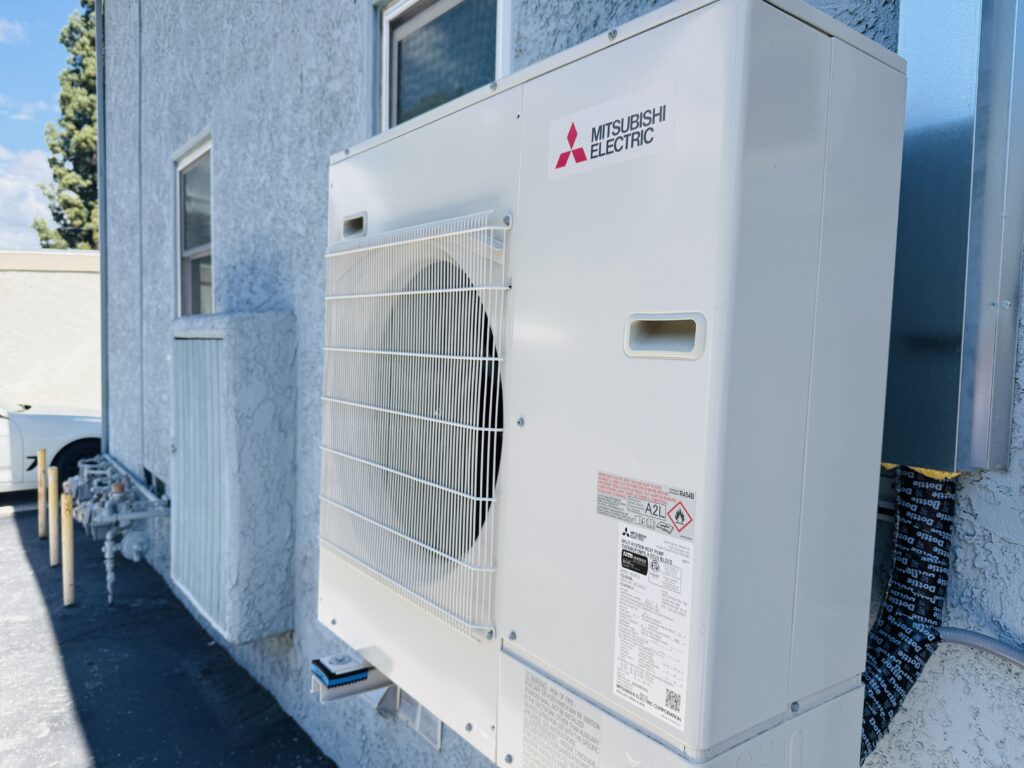
Policies to transition buildings off polluting fossil gas are holding up in federal courts across the U.S., Alison Takemura reports for Canary Media.
Since the now-famous Berkeley CRA decision, developers, manufacturers, and others have used the same legal argument in 13 other lawsuits against cities, counties, states, and an air district. “Industry has really gone on a spree,” Daniel Carpenter-Gold told Canary Media. But in all six post-Berkeley cases for which federal judges have weighed the EPCA argument, they’ve rejected it and upheld pro-electrification standards. “There is a clear consensus among the courts that have ruled on the issue that the 9th Circuit’s decision in [California Restaurant Association] v. Berkeley was wrong,” Carpenter-Gold said.
Robinson Meyer of Heatmap News joined Chris Hayes on MS Now for an in-studio discussion of how the current energy crisis is also becoming a real opportunity for the energy transition.
The grid monitor, North American Electric Reliability Corp., is issuing a rare warning of “significant risks” to the grid as it develops new standards for large data centers, Crista Marshall reports for E&E News.
Dominion’s president and CEO said in a call with analysts last week that its 2.6-GW Coastal Virginia Offshore Wind project — the largest wind farm in the United States — would generate approximately $5 billion in fuel savings for customers over the first 10 years of operations.
Booked any summer travel lately? Then you probably know that airlines are canceling flights and raising airfares, as Bloomberg reports.
Electric Vehicles
“Old is gold,” Dan McCarthy writes at Canary. Used EV sales jumped by 34% in 2025, compared with the prior year, as new EV sales shrank. “Although Americans still buy a lot more new EVs than used ones, Cox Automotive data shows the gap beginning to close.”
States have been slow to install EV charging infrastructure but the pace is starting to quicken. That’s according to a new report from the Sierra Club that assesses the progress under three major federally funded programs: the National Electric Vehicle Infrastructure (NEVI) Formula Program, the Clean Ports Program (CPP), and the Charging and Fueling Infrastructure (CFI) Grant Program.
Costa Rica is a prime example of how EVs are rapidly gaining popularity in many less affluent countries during the energy crisis, Jack Ewing reports for the NYT.
Even electric trucking is having a moment. “Long considered an implausible alternative to conventional, diesel-powered road freight, EV trucks have been quietly growing into a formidable business,” David Fickling writes for Bloomberg.
Here in California, one state lawmaker wants to make zero-emission medium- and heavy-duty trucks easier to afford: Sen. Eloise Gomez Reyes is pushing 1213, a bill to cut the sky-high price of electric trucks, Landline reports.
Tesla’s Semi truck is about to hit the roads in California. Tesla’s combination of mileage and price “appears set to transform an industry hungry for an affordable way to move freight without burning diesel — especially in California, the country’s top market for electric trucks,” Jeff St. John reports for Canary Media.
Ford gave automotive reporters like Andrew Moseman a glimpse of their new facility in Long Beach where the company is developing its next battery-powered vehicle, an affordable midsize pickup truck due out next year. “The group studied EV brands like Tesla and Rivian that simplified their electrical and computing architectures to strip miles of expensive wiring from their vehicles.”
California
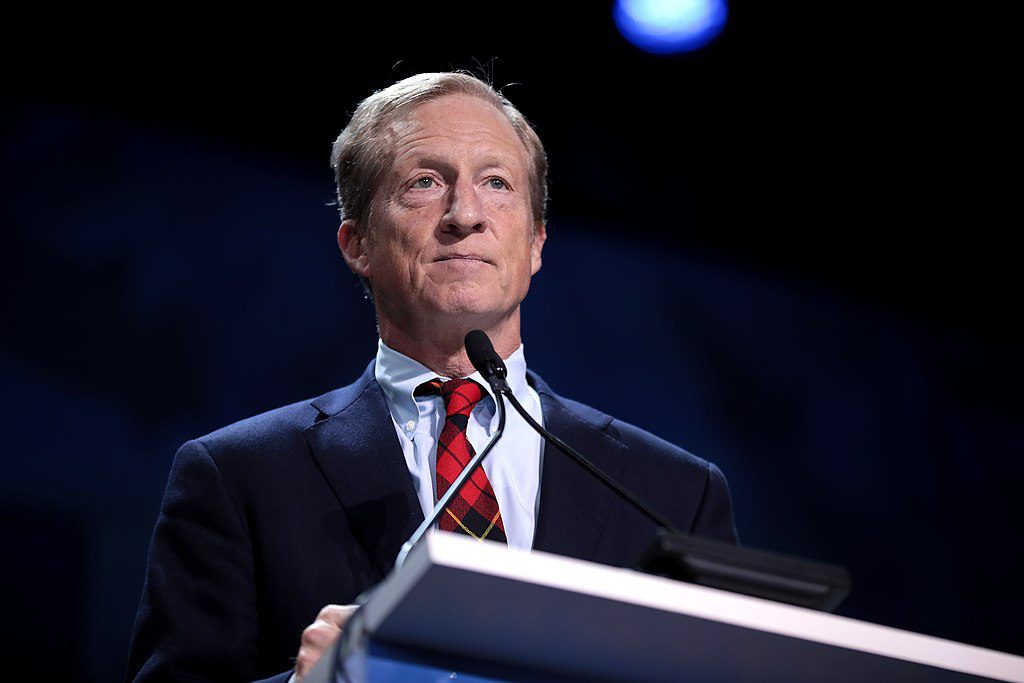
Tom Steyer is the obvious choice for California if you are a voter focused on climate and the environment, Sammy Roth writes at Climate-Colored Goggles. “I would expect [Xavier] Becerra, if he wins, to handle climate much the same as Newsom has the last few years: keen to defend California’s existing accomplishments but not eager to take bold new steps,” Roth writes.
Last week, I wrote about the governor’s race from the perspective of a climate voter, and asked whether taking oil industry money should disqualify Becerra.
The last California-bound oil tanker to pass through the Strait of Hormuz since the U.S. started bombing Iran just unloaded its cargo at the Port of Long Beach. Now, California must figure out how to make due without 200,000 barrels of oil a day, writes Blanca Begert for the LA Times in the best explainer I’ve seen of how the state’s oil market functions. Begert was on KCRW talking about the story.
The Extended Day-Ahead Market (EDAM) is born. The new system runs on the California Independent System Operator network, but it will be overseen by an independent board of electricity experts from across the western U.S., Jake Bolster reports.
California officials called that launch “a historic expansion of western regional energy markets that builds on the proven success of the Western Energy Imbalance Market to lower customer costs and boost reliability of the western grid.” It marks the culmination of years of prep work.
The California Energy Commission wants to peek under the hood of the Trump Administration’s attempts to pay off wind developers. The CEC issued an administrative investigative subpoena to Golden State Wind LLC seeking documents and information related to the company’s recent agreement with the U.S. Department of the Interior to accept a payout in exchange for voluntarily abandoning its offshore wind lease. The state may have solid legal ground to stand on, should it decide to sue, my UCLA Law colleague Allan Marks told Noah Baustin at POLITICO.
For the first time, growers in parts of the San Joaquin Valley have to reveal how much groundwater they are pumping. Ian James reports for LAT that the State Water Resources Control Board ordered landowners in Corcoran and Pixley to submit detailed reports by Friday.
California Insurance Commissioner Ricardo Lara says that an investigation revealed that State Farm delayed and underpaid claims from the LA wildfires. He’s seeking more than $2 million in damages and could ask to suspend the company’s license for up to a year, Brianna Sacks reports.
Los Angeles
Mayor Karen Bass this week rolled out an infrastructure plan for the city of LA, because we didn’t have one.
Alissa Walker reports on the unveiling of this CIP (Capital Infrastructure Program). The report of recommendations is 112 pages. And there is a digital map of coming projects for accountability purposes. “Today feels hopeful about how we all take care of Los Angeles,” one stakeholder told Walker.
Bass and City Councilmember Nithya Raman clashed over who was more to blame for crumbling infrastructure and failures to build more housing in the first real debate of the mayor’s race held last night.
The CPUC denied SoCal Gas permission to collect $266 million from its customers to fund a sprawling hydrogen pipeline network it hopes to build.
“Environmental and consumer advocates are cheering the decision — and urging state policymakers to push for better options than costly hydrogen infrastructure projects to tackle the challenge of decarbonizing heavy industry,” Jeff St. John reports for Canary.
Reader Comments
One Reply to “Climate Journalism is “Breaking but Not Broken” ”
Leave a Reply


About Evan

Evan George is Director of Communications for the UCLA Emmett Institute, a leading environmental law center. He also writes The Drain, a weekly roundup of environmental a…
READ more
Interesting that I haven’t seen much general-media or climate-media coverage of the Kinder-Morgan “Western Gateway” pipeline project. It would connect Texas with Arizona, feeding into and reversing the existing (out of California) pipeline flows between AZ and California. Essentially, it would bridge the divide between CA and the main Oil Patch for crude and some refined products. Interesting…
https://westerngatewaypipeline.com/