


























































Seven County case
The Other Big Environmental Case at the Supreme Court

Guest contributor Clifford Villa writes that Dept. of the Air Force v. Prutehi Guahan, which will be argued Wednesday, raises profound questions for democracy and environmental justice.
Guest contributor Clifford Villa is law professor at the University of New Mexico School of Law. With all eyes on Suncor Energy v. Boulder County, it’s been easy to overlook another environmental law case on the docket of the U.S. Supreme Court this week: Dept. of the Air Force v. Prutehi Guahan. Prutehi Guahan illustrates …
Continue reading “The Other Big Environmental Case at the Supreme Court”
CONTINUE READINGThe Environment is a System, Not an Array.
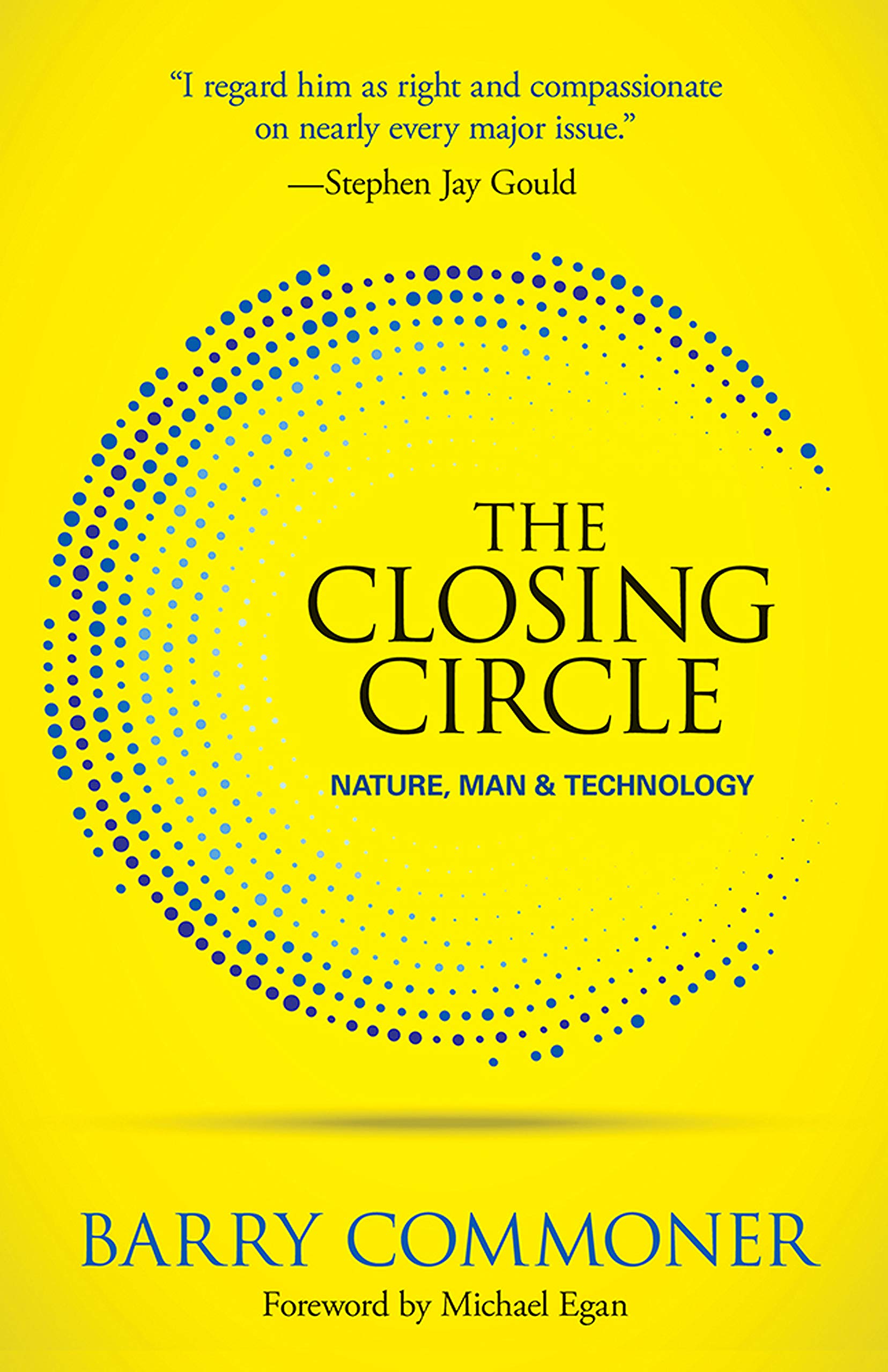
In 1969, Barry Commoner summed up much of environmental science in six words. Today’s conservatives don’t get it.
People have an intuitive tendency to focus on an action’s immediate direct effects. The same intuition leads us to downplay effects that are indirect, long-range, and cumulative. This can lead us astray, as it has the Supreme Court, when dealing with impacts on environmental systems. Writing at the outset of the modern environmental world, biologist Barry Commoner tried to crystalize what was known about the environment into four crisply phrased laws. The first law read simply: “Everything is connected to everything else.” What we have learned since Commoner published The Closing Circle in 1969 has only confirmed that insight.
This interconnected means that the environment is a system (really, a nested set of systems), where interactions are paramount. It’s not just an array of different things happening independently in different places or times. That’s true, as we’ve learned, not only of the environment but the global economy to which it is linked and of the geopolitical realm linked to that.
CONTINUE READINGNEPA Update: The Other Shoe Drops
A New D.C. Circuit Case reads the Seven County decision for all it is worth.
Based on the facts as set forth by the D.C. Circuit, its decision in the Tennessee Pipeline case may have been right. But the opinion went astray with its unrestrained enthusiasm for deference in NEPA cases, and its assumption that the same rules carry over in reviewing decisions under other statutes like the Natural Gas Act.
CONTINUE READINGThe Assault on NEPA: A Threat Assessment
National Environmental Policy Act
NEPA is under multiple attacks. Which are the most serious?
NEPA, the law governing environmental impact statements, is under concerted assault from Congress, the White House, and the Supreme Court. As we will see, the Supreme Court’s recent decision in the Seven County Infrastructure Case is probably the biggest problem. Notably, the debate over NEPA has taken place without much hard data about its effectiveness or costs, so everyone seems free to make their own assumptions.
CONTINUE READINGJoin Our Mailing List
Climate policy is changing rapidly. Stay in the loop with expert analysis via email Monday - Friday.

The Drain is a roundup of climate and environmental news from Legal Planet delivered to your Inbox once a week.