



















































Democratic Governors and the A-word
The Drain is a weekly roundup of environmental and climate news from Legal Planet.
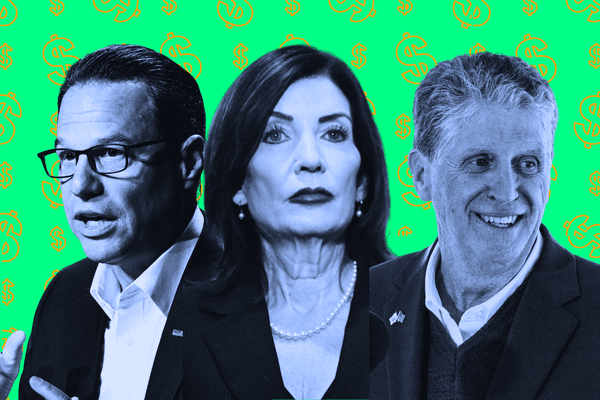
The governors and legislative leaders of several blue states on the East Coast are obsessed with the A-word: affordability. So much so that several of them are looking to pull money away from state programs that boost renewable energy and energy efficiency, as a shortcut to try to lower electricity costs.
In Maryland, Rhode Island, and Massachusetts, Democrats have taken steps to “cap or reduce funding for energy efficiency programs,” Allison Prang reports for Bloomberg Law. These are programs that aim to help residents make home improvements to drive down their energy usage, most likely reducing their utility bills in the long-term.
Governors across New England and the mid-Atlantic are targeting the same climate goals and policies they once championed. The embrace of affordability politics by blue state governors, like New York’s Kathy Hochul and Pennsylvania’s Josh Shapiro, “is pushing what remains of U.S. climate policy to the brink,” Adam Aton and Marie French write for POLITICO. Five years ago, Rhode Island Gov. Dan McKee signed into law the 2021 Act on Climate, which sets enforceable climate emissions reduction mandates, such as 45% reductions below 1990 levels by 2030. Now, McKee has pitched cuts to the taxes and policy charges that comprise about one-quarter of his state’s residential utility bills.
Is such a dramatic retreat from smart energy policies necessary, and will it actually help with the affordability crisis? It sure seems short-sighted. “It’s kind of like heating your home by burning all your blankets,” Rebecca Foster, the CEO of VEIC, a nonprofit that administers energy efficiency and other decarbonization programs for states, told POLITICO.
My UCLA Law colleague Kimberly Clausing just testified at a spotlight forum of the U.S. Senate, where she said, “the repeal of clean energy tax credits have raised many people’s utility bills, and the current war in Iran is needlessly raising gas prices at the pump… A less appreciated driver of affordability is climate change itself.” In recent research, Clausing has documented how climate change is already increasing costs for US households.
I understand that Democrats are eyeing the midterm elections and see the Trump Administration vacating a lane on affordability politics. Trump attacked Iran for no strategic reason and created a worldwide energy crisis that is hurting Americans, especially at the gas pump. Have you seen this video on social media poking fun of Republicans for parroting the same talking point from the Trump administration about the energy crisis? It’s one clip after another of talking heads on Fox News saying, “short-term pain for long-term gain.” I’d argue it’s short-term pain without any long-term gain. But Democrats who are eager to backslide on their own climate agenda look like they are taking the wrong lesson from MAGA’s energy crisis.
Now is the time to communicate the benefits of clean energy versus fossil fuels that travel through the Strait of Hormuz. Now is the time to obsess over cleaner cars and better grid batteries. Now is the time to extol what more, not less, regulations can do to keep utility bills down.
Now is probably not the time to borrow the Republican playbook from a state like Arizona, where the elected body that regulates utilities, unanimously voted last month to eliminate the state’s renewable portfolio standard. “The policy, which the commission set in 2006, called for 15% renewable electricity by 2025” but the state already hit that target, reports Canary Media’s Julian Spector. “It’s not clear whether the end of Arizona’s renewables standard will noticeably lower customers’ bills.” That’s not the play.
State and local leaders who are genuinely interested in what they can do to bring down the cost of electricity can look to a different playbook that was released just yesterday. The “CELS Playbook: Clean Energy for State and Local Governments,” from the Federation of American Scientists has a series of recommendations for governors and state legislators especially around how to better resource their public utility commissions.
For a quick listen, Robinson Meyer at Heatmap News talks with one of the playbook’s main authors, Arjun Krishnaswami, in a new Shift Key podcast. Utility commissions “as the only real public institution that’s part of this process should be ‘main characters’ in that process in representing the public interest,” Krishnaswami says. Utility commissioners can be empowered to really scrutinize and interrogate utilities’ proposals.
Speaking of Heatmap, the outlet just launched the Electricity Price Hub in collaboration with MIT. The hub is a new public data platform that provides monthly, utility-level estimates of residential electricity rates and bills across the U.S., broken down by generation, transmission, and distribution costs.
Blue state governors are right that this is a moment of extreme interest in electricity costs. Bills are rising so fast that Americans who normally don’t think about poles and wires are ready to pay more attention and ask hard questions. “You should use that question as an opportunity,” Krishnaswami says.
If these affordability questions are interesting to you, join me at the UCLA Emmett Institute’s annual symposium this Friday, April 3 for a day of discussions on how to merge climate policy and affordability. Robinson Meyer will lead a panel on “Growing the Grid Without Breaking the Bank.” John Reynolds, the new president of the California Public Utilities Commission is the keynote speaker, and he’ll be talking about the public utilities commission’s role in all of this. We’ll also be exploring the transition away from fossil fuels and how to build more housing without abandoning environmental protections. We’re near capacity so sign up now. See you there.
Welcome to the Drain, a weekly roundup of environmental and climate news. Song of the week is “Should Have” by Kate Stephenson, a song about egos, backbones, and a-holes.
The Courts
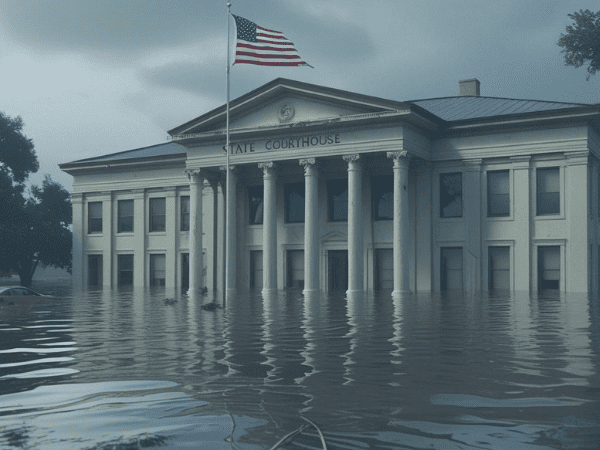
Vermont’s climate superfund effort to make fossil fuel companies pay for damage caused by climate change was tested Monday in a federal courtroom, where the state argued that two lawsuits challenging its groundbreaking 2024 law should be thrown out. AP reports that Vermont insisted its law doesn’t conflict with federal law or policy.
The Republican governor of Utah, Spencer Cox, on Monday became the first governor to sign into law a bill that seeks to give immunity to corporations and individuals for causing climate-related harm. “Under the law, potential legal challengers must show ‘clear and convincing evidence’ that a company violated a specific emissions statute or permit,” Lesley Clark reports for E&E News.
A federal court yesterday denied the Trump administration’s request to pause enforcement of California’s landmark oil and gas health buffer law during its legal challenge. The court’s denial of the administration’s request for a preliminary injunction means the state’s 3,200-foot health protection zones between new oil drilling and communities, established by Senate Bill 1137, will remain in effect while the lawsuit is heard, CBD announced.
A coalition of 21 state and local governments filed a lawsuit yesterday challenging the Trump administration’s repeal of the 2024 Mercury and Air Toxics Standards rule, which established limits for toxic air pollutants, Stateline reports.
Last week, a judge of the U.S. District Court for the District of Columbia rejected claims by trade associations representing the gas industry that EPCA prevented Washington from requiring in 2022 that new and renovated buildings be constructed to a net-zero energy standard by 2027, Nina Farrah reports for E&E News.
Farrah also has the scoop on a federal district court here in California rejecting four amendments to rules that require agencies to consult with federal biologists to understand how a project might affect a listed endangered species or its habitat.
The Maryland Supreme Court last week dealt a blow to cities and other local governments looking to sue oil companies over climate change, Karen Zraick reports. The court ruled against reviving climate lawsuits brought by Baltimore, Annapolis and Anne Arundel County that were struck down by lower courts.
The U.S. District Court for the District of Maryland rejected Washington Gas’s challenge to Montgomery County’s Comprehensive Building Decarbonization Ordinance, which would require all-electric building standards for new construction by the end of this year. Earthjustice says it shows “an emerging consensus among courts that these policies are legally sound and casting further doubt on the Ninth Circuit decision of California Restaurant Association v. City of Berkeley, which struck down a similar ordinance.”
More Energy

When it comes to onshore wind, more than two dozen wind farms across the U.S. are being delayed as the Trump administration sits on military reviews that were once considered routine, Axios reports.
And the catch-and-kill deal to pay TotalEnergies to abandon its U.S. offshore wind ambitions might not be the last of its kind, Maria Gallucci reports for Canary Media.
But look at Virginia: Dominion Energy’s major Coastal Virginia Offshore Wind project is already sending surges of power to the grid, after its first commercial turbine was switched on last Monday, reports the Virginia Mercury. It is the largest offshore wind project in America.
Democratic Senator Elizabeth Warren and Republican Senator Josh Hawley are urging the Energy Information Agency to provide better information on how much electricity data centers actually use, Molly Taft reports for WIRED. “If we’re worried about ratepayers paying data-center energy costs, then knowing how much energy data centers are using is a necessary part of that calculation,” Ari Peskoe says in the story.
The Valley Clean Infrastructure Plan envisions converting 136,000 acres of land into 21 gigawatts of battery-backed solar power — nearly as much utility-scale solar capacity as has been installed in California to date, Jeff St, John reports for Canary “This will be not only the largest project in California, or the largest project in the United States,” said one third-generation farmer and the district’s board president since 2022. “This will be the largest project in the world.”
Emissions

This week, more than 250 scientists returned to the site where Allesandro Volta discovered methane. They released the Angera Declaration, a 10-point agenda to accelerate global progress on the super pollutant responsible for more than 30% of today’s warming and a major contributor to air pollution.
Methane leaks and the efforts to prevent them were not exactly talk of the town in Houston during CERAWeek, but there was some mention of it in between all of the focus on energy dominance. Mike Lee reports for E&E News that some oil and gas companies are still working on methane mitigation even if they aren’t talking about it.
UCLA’s STOP Methane Project published a top ten list of largest persistent “stubborn, super-polluting” methane emissions and 7 of the 10 sites are in Texas.
A Guardian investigation into the reliability of methane certification issued by MiQ reveals weakness of a voluntary model that is supposed to help meet European Union Methane Regulation, or EUMR, standards.
A new study from UC Riverside shows that systems designed to capture methane from cow manure, called dairy digesters, are highly effective. But on the occasions they fail, the leaks are large enough to offset their climate benefits.
The US has caused $10 trillion in global damages to the world over the past three decades through its vast planet-heating emissions, with a quarter of this economic pain inflicted upon itself, new research highlighted by The Guardian has found.
Meanwhile, The Trump administration EPA will temporarily suspend some anti-smog restrictions on summertime gasoline blends, in an attempt to ease the recent spike in fuel prices stemming from the war with Iran.
EVs
I wrote recently about BYD’s growing dominance in electric vehicles, from Brazil and Mexico to potentially even Canada. Now Beijing auto giant has outlined plans for at least 20 dealerships in its first year in Canada, writes Alexander Kaufman.
And Chinese EVs are making money. Stellantis-backed Leapmotor, Nio, and Xpeng have now all joined BYD, Xiaomi, and Li Auto in what is a growing roster of Chinese makers of plug-in vehicles that are no longer in the red but are turning profits, Suvrat Kothari reports for Inside EVs.
Now is a great time to buy an EV, writes Michael Grunwald. “Maybe if $5 gas can inspire more individual Americans to change, our leaders will eventually follow.”
Right now, the five best-selling electric vehicles in the U.S. all cost less than the national average for a new car.
Los Angeles and California
State surveyors hold their final Sierra snow survey of the year today — on April Fool’s Day. “California’s snowpack is supposed to reach its peak April 1,” Ian James reports, but instead of snow, there’s almost none.
A candidate forum for the LA mayor’s race held last week by Streets for All focused on transportation and housing and featured three of the candidates: Nithya Raman, Rae Huang, and Adam Miller. Mayor Karen Bass was not in attendance, nor was celebrity boyfriend Republican Spencer Pratt. The candidates talked public transit and congestion pricing.
LA Metro approved a new rail line! The 9.7 mile extension would add nine stops to the K Line and increase ridership to 98,000 between Hollywood and an extension to Torrance that is in the planning phase. Elected officials said the project could help LA evolve from a transit desert into a “transit mecca” LA Public Press reports.
LA County launched a survey to hear from residents impacted by the 2025 fires. You can weigh in here.
State Sen. Catherine Blakespear introduced a bill last week seeking to more narrowly define what kinds of facilities are exempt from CEQA and to add protections for communities near developments, Alejandra Reyes-Velarde reports at CalMatters.
Has California’s decades-long fossil fuel phaseout left it vulnerable to the Iran oil shock? Jake Bittle asks at Grist.
Big Tech joined Big Oil in spending $39 million to influence state politics last year, CalMatters’ Jeremia Kimelman explains.
One of the final panels at CERAWeek in Houston was on affordability and spiking electricity rates. Southern California Edison president and CEO Steve Powell said wildfire-related upgrades dramatically drove up his customers’ rates between 2019 and 2024, Axio reports. But with those investments made, he expects increases to be in line with inflation “for the next five years and maybe beyond.”
People
Kate Marvel, a well-known climate scientist and author resigned from her position at NASA last week, citing the Trump administration’s attacks on climate science in the United States. She is one of 95,000 workers who have left federal science agencies through layoffs, retirements or resignations, according to the New York Times.
Thomas Jorling, now 85 and retired, spoke in an interview with the New York Times about the drafting of the Clean Air Act and his understanding of the lawmakers’ intent when they were hammering out the details. It’s at odds with modern MAGA Republicans.
Ann Carlson, my Emmett Institute colleague, has a new booking coming out this month. “Smog and Sunshine: The Surprising Story of How Los Angeles Cleaned Up Its Air” recounts the dramatic policy fights and the determined scientists, lawyers, and community members who worked alongside public officials to face off against major polluters and save their city. She did a Q&A with me for UCLA.


About Evan

Evan George is Director of Communications for the UCLA Emmett Institute, a leading environmental law center. He also writes The Drain, a weekly roundup of environmental a…
READ more
Reader Comments