





























































endangerment finding
Bring Back “Trump Classic”

The original version of Trump was bad. The current version is much worse.
Trump has succeeded in his second term in making every past President including even himself look better. We’re now almost a year and a half into Trump’s second term. From almost every point of view, it’s worse than his first term. It reminds me of the “New Coke” that Coca Cola once introduced, which was a disaster that led to the reintroduction of what was then dubbed “Coke Classic.” Trump Classic was committed to fossil fuels and eliminating environmental protections. But in almost every respect, his policies were less radical and his methods were less drastic.
Project 2025 Was Awful. Trump Has Been Worse.

Trump disowned Project 2025. In retrospect, it seems like he considered it too moderate.
When the Heritage Foundation released Project 2025, there was a big hullabaloo, and Trump quickly disowned it. Bad as it was, however, it appears Project 2025 apparently failed to anticipate the full sweep of Trump’s second term. Many of Trump’s actions mirror Project 2025 recommendations, but in some key areas he’s gone much further. Here …
Continue reading “Project 2025 Was Awful. Trump Has Been Worse.”
CONTINUE READINGThe Environment is a System, Not an Array.
In 1969, Barry Commoner summed up much of environmental science in six words. Today’s conservatives don’t get it.
People have an intuitive tendency to focus on an action’s immediate direct effects. The same intuition leads us to downplay effects that are indirect, long-range, and cumulative. This can lead us astray, as it has the Supreme Court, when dealing with impacts on environmental systems. Writing at the outset of the modern environmental world, biologist Barry Commoner tried to crystalize what was known about the environment into four crisply phrased laws. The first law read simply: “Everything is connected to everything else.” What we have learned since Commoner published The Closing Circle in 1969 has only confirmed that insight.
This interconnected means that the environment is a system (really, a nested set of systems), where interactions are paramount. It’s not just an array of different things happening independently in different places or times. That’s true, as we’ve learned, not only of the environment but the global economy to which it is linked and of the geopolitical realm linked to that.
CONTINUE READINGDissecting EPA’s Endangerment Repeal: Series Wrap-Up:
Here’s what you need to know to understand the upcoming legal battles.
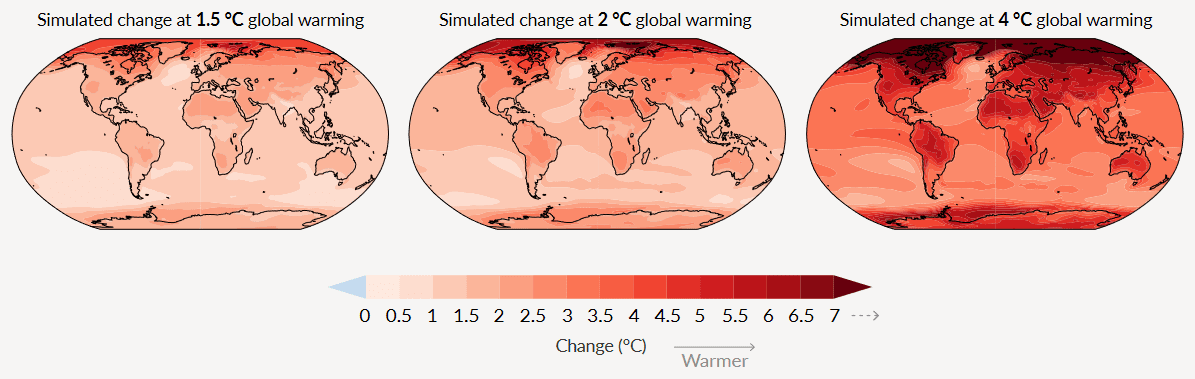
Yesterday was the last of five Legal Planet posts on EPA’s repeal of the Endangerment Finding, which it based on legal arguments that it has no power to regulate vehicle emissions of greenhouse gases. The series began with a quick overview of the issues. The remaining posts focus on the reasons that EPA was right to issue the Endangerment Finding in the first place in 2009, the legal precedents supporting the Endangerment Finding. and the impact of the repeal on future climate actions. The bottom line is that EPA was right to issue the Endangerment Finding and wrong to repeal it.
CONTINUE READINGThe Tangled Web of the Boulder v. Suncor Cert Grant

Pass me some aspirin. Attorney General Rob Bonta might want some, too.
On Monday, the U.S. Supreme Court agreed to take up the Boulder v. Suncor Energy case, one of the growing set of state-law nuisance and consumer protection cases filed by states and municipalities against fossil fuel companies for harms from climate change. The Court will review the Colorado Supreme Court’s decision to allow the case …
Continue reading “The Tangled Web of the Boulder v. Suncor Cert Grant”
CONTINUE READINGThe Overlooked Precedent Supporting EPA Regulation of Greenhouse Gases
Even Roberts and Scalia agreed that Mass. v. EPA is the law
An important precedent has been overlooked in the coverage of the Trump EPA’s repeal of the 2009 Endangerment Finding. The 2009 finding relied was based on , in which the Court had held that the Clean Air Act covers air pollution and directed EPA to determine whether greenhouse gases are harmful. One reason to worry about the litigation is that the conservatives Justices all dissented from Massachusetts v. EPA over the repeal. But there’s another equally important precedent: American Electric Power v. Connecticut (AEP). That ruling was joined by Chief Justice Roberts and Justice Scalia, so it may carry more weight.
CONTINUE READINGA.I. Pollution in the Air — and the Public Comments

The Drain is a weekly roundup of environmental and climate news from Legal Planet.
Artificial intelligence has already replaced some artists, translators, and podcast hosts. Now it’s coming for… concerned citizens? That’s right. AI-assisted campaigns have started flooding the inbox of government agencies that seek to engage with the public. Do you remember last June when the South Coast Air Quality Management District Board killed two common sense clean …
Continue reading “A.I. Pollution in the Air — and the Public Comments”
CONTINUE READINGThe Affirmative Case for Finding Endangerment
Despite hairsplitting by the current EPA, finding endangerment is a no-brainer.
or EPA to decide that vehicle greenhouse gas (GHG) emissions aren’t harmful is iike NASA deciding that the earth isn’t round after all. Over the next year or two, lawyers will be picking over EPA’s detailed legal arguments. Let’s not get mired in the weeds. It’s crazy that this issue is even being raised.
In 2007, the Supreme Court told EPA to do two things: (1) consider whether GHGs endanger human health and welfare, and (2) if the answer is yes, regulate vehicle emissions of GHGs. That’s exactly what EPA did. Nothing has changed in the meantime.
Hot Take on the Endangerment Repeal
It’s a tweaked version of arguments that the Supreme Court rejected in 2007.
EPA’s argument for repealing the Endangerment Finding is basically a rehash of legal arguments that were rejected by the Supreme Court in 2007. These arguments haven’t improved with age. Notably, EPA doesn’t dare contest the science.
CONTINUE READINGTrump Will Kill Climate Regulations, But How Exactly?

The Drain is a weekly roundup of environmental and climate news from Legal Planet.
The Environmental Protection Agency will officially revoke what’s known as the endangerment finding tomorrow and in so doing try to erase the basis for virtually all that agency’s regulations cutting greenhouse gases. It’s not really a surprise — we’ve been waiting for this announcement for a year. But seeing the agency’s precise justification will help …
Continue reading “Trump Will Kill Climate Regulations, But How Exactly?”
CONTINUE READINGJoin Our Mailing List
Climate policy is changing rapidly. Stay in the loop with expert analysis via email Monday - Friday.

The Drain is a roundup of climate and environmental news from Legal Planet delivered to your Inbox once a week.