


























































Energy
A Tariff on Data Centers Could Help Them Pay Their Fair Share

chaddavis.photography via flickr
The first in our new “Energy Corner” series, this post looks at how California could design a rate structure for large load customers to join the electric grid without burdening ratepayers.
A flurry of new comments was filed last month in Pacific Gas & Electric’s (PG&E) proposal to implement a new electric tariff bill, one specific to large-load customers (read: data centers). Such tariffs determine the electricity rates a utility can charge each class of customer, and the conditions under which it must provide service. PG&E’s …
Continue reading “A Tariff on Data Centers Could Help Them Pay Their Fair Share”
CONTINUE READINGPlug-In Solar Bills are Taking State Legislatures By Storm

Chances are your state legislature is considering a bill to authorize plug-in solar panels for your balcony or backyard.
It’s worth taking notice when any clean energy legislation is passing with bipartisan support in all kinds of states. Bills on balcony solar, also called plug-in solar, have been signed or moved forward in so many states around the country that it’s probably easier to name the 16 or 17 states that are NOT working …
Continue reading “Plug-In Solar Bills are Taking State Legislatures By Storm”
CONTINUE READINGChina’s Climate Policies: A Timeline
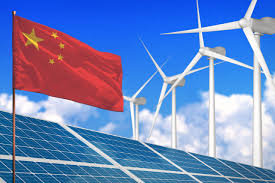
How has China has gone from climate action’s problem child to a promoter of clean energy?
China has long been the world’s top emitter of greenhouse gases, making its climate and energy policies crucial for the rest of the world. It initially took the position that Westerners had caused the problem and should carry the entire burden of fixing it. Over time, however, it has shifted into a position of leadership in clean technology and cooperation on climate issues.
CONTINUE READINGCPUC Proposed Decision Risks Derailing Gas Transition

California passed a promising Neighborhood Decarbonization Program. The CPUC’s plan for implementing SB 1221 sets it up to fail.
My UCLA colleagues and I have written extensively on the promising opportunity for SB 1221 to help interested communities transition off gas. Now, the California Public Utilities Commission (CPUC) has released its long-awaited proposed decision on its plans to implement the SB 1221 pilot program, and the proposal is…disappointing. The current design seems to set the program up to fail. Of biggest concern, the decision proposes to require pilot applicants to navigate a multi-stage process with duplicative …
Continue reading “CPUC Proposed Decision Risks Derailing Gas Transition”
CONTINUE READINGKeeping the Energy Transition Affordable
A new CLEE report identifies policy solutions to lower California’s electricity rates.
In recent years, California’s already-high electricity rates increased far beyond the rate of inflation. Unsustainably high electricity rates threaten California’s continued progress on climate change and pose painful affordability burdens on California residents and businesses. High electricity rates also threaten California’s leadership in decarbonization and the clean energy transition, which largely relies on the …
Continue reading “Keeping the Energy Transition Affordable”
CONTINUE READINGWhy Does the Trump Administration Keeping Attacking Science?

Apparently, the Administration views science as fatally infected with woke ideas and lacking much other value.
Make no mistake, the Trump Administration is engaged in a serious, carefully honed, effort to undermine American science. The National Science Foundation has lost a third of its staff, while the National Institutes of Health have lost 20%. EPA’s science office is being shuttered. Trump’s proposed budget included a 54% cut for NSF, 12% for NIH, and 46% for NASA’s space research. And last week, the government proposed changes to politicize research funding decisions at the expense of merit review. It also proposes making continuation of long-term funding dependent on political whim, which will drive researchers away from projects taking longer commitments.
CONTINUE READINGStatutory Language? Who Cares About Statutory Language?

A new DOE guidance seems flatly contrary to the statute it’s acting under.
The Department of Energy has issued new guidance that cuts off rebates for people who replace a gas furnace with a heat pump. Under the new guidance, the rebate will be allowed only if the heat pump replaces an electric furnace. Unless I’m missing something, the statute creating the program says the exact opposite. I suppose maybe at this stage I should find this blithe lack of concern for legality unsurprising. Maybe I haven’t adjusted to the Trump era as much as I’d thought. The rebate program specifically covers “any “project that includes [among other things] … the purchase or installation … of an electric heat pump … to replace a nonelectric appliance.”
The Compelling Case for Clean Energy Subsidies

There’s a solid economic case for government support
Tax credits and direct subsidies sound like handouts. That’s not true in the case of renewable energy and electric vehicles. No should feel bashful in advocating for these subsidies. They provide very real benefits to society, not just to the shareholders in a few firms. Tax credits and subsidies. like those that were contained in the Inflation Reduction Act, will help us avoid many billions of dollars a year of harm to our environment and health. They will also make America competitive in what are clearly the industries of the future, rather than abandoning the field to China.
CONTINUE READINGGas Pains
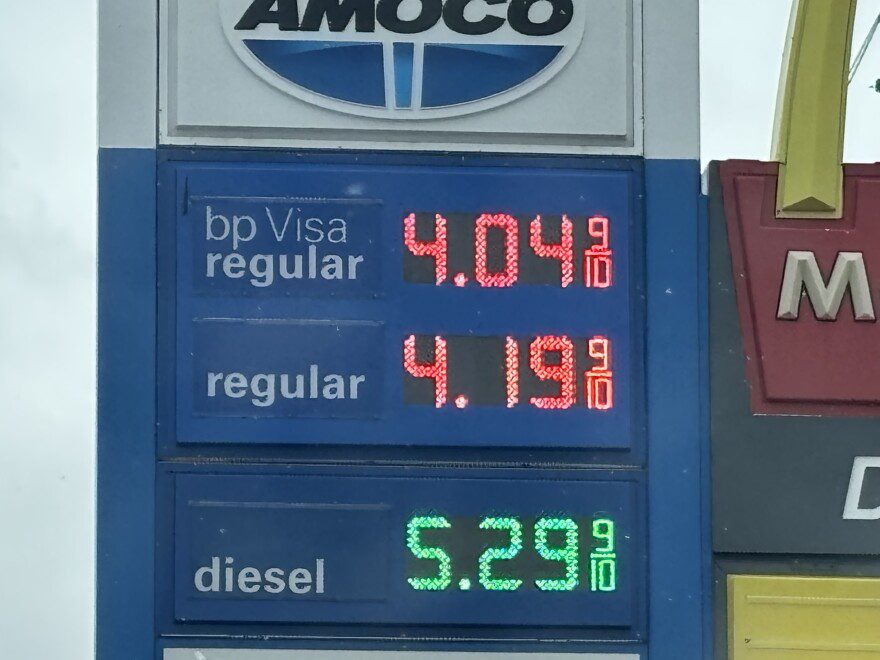
Higher gas prices are inflicting real pain on lower-income families.
Commentators seem bemused by the intense political reaction to gasoline prices, which are up by about a dollar a gallon due to the war. No doubt the reaction is accentuated because gas prices are highly visible. People buy gas frequently and even more frequently see signs posting the prices. But to a greater extent than many in the upper income distribution appreciate, the actual economic pain is very real. Current price increases presumably won’t be permanent, but the problem isn’t going to go away quickly and might well get worse.
CONTINUE READINGToo Cheap to Meter?

Unlimited energy abundance is more of a pipe dream than a realistic policy goal.
A recent post by Matt Yglesias on on “the case for clean energy abundance” disturbingly off pitch. One reason is that the post seems unduly dismissive of environmental harms. It pooh-poohs objections to a proposed ultra-large solar that would destroy what Yglesias describes as a “bunch of forest.” Maybe this would be warranted, but it’s not wrong to consider the environmental cost. Yglesias also opposes efforts to restrict fossil fuel production. This is partly on political grounds, because it makes it hard for Democrats to win in places like Louisiana, and partly because he doesn’t think those efforts accomplish much anyway. Yglesias could be right about the benefits of this hands-off approach, to regulating fossil fuels but it would be nice to see some acknowledgement of the harm to public health and the environment. Instead, he describes the only problem with coal as being “smoggy,” which underplays coal’s serious public health and environmental harms.
CONTINUE READINGJoin Our Mailing List
Climate policy is changing rapidly. Stay in the loop with expert analysis via email Monday - Friday.

The Drain is a roundup of climate and environmental news from Legal Planet delivered to your Inbox once a week.